
Agentic Ad Tech Confusion: Revolution or Evolution?
by Shirley Marschall on 14th Jan 2026 in News
This week Shirley breaks down the forefront of Agentic ad tech - and asks if this is really as groundbreaking as it seems…
First things first:
Go to a window.
Now open it.
And out with all the New Year’s resolutions about not jumping on yet another hype train.
Because, as everyone 'predicted', Agentic AI has taken centre stage in 2026. Literally, thanks to CES. And not even two weeks into the new year, the agentic theme has fully taken over ad tech.
Yes, everyone seems to have an opinion on Agentic AI. But if the main thing you’re feeling right now is confusion, you’re in excellent company. Index Exchange CEO Andrew Casale said it out loud: we’re in a 'soup of confusion'; an agentic one.
And it’s not hard to see why. Just look at the number of protocols that emerged over the past several months. And it’s not just the number of protocols that’s impressive. It also looks like we’ve finally broken the magic barrier of three-letter acronyms and moved decisively into the 4+ era.
Ad Context Protocol (AdCP).
IAB Tech Lab’s Agentic Real-Time Framework (ARTF).
LiveRamp’s User Context Protocol (UCP) (which was donated to the IAB Tech Lab).
Anthropic’s Model Context Protocol (MCP).
Google’s Agent2Agent (A2A).
Different names, different origins, but all circling the same unresolved question: what does agentic actually mean? Beyond the alphabet soup, there are still big, unanswered questions. About definitions. About scale. About adoption. About whether "agentic" is just advanced automation or whether it’s genuinely pointing toward an open system where buyer agents can access inventory and data anywhere, and seller agents are ubiquitous, interoperable, and easy to call. After all, agentic ad tech should be making things simpler, not more complex. Right?
Anyway, at the very centre of the early 2026 agentic ad tech confusion are two conflicting narratives:
Start from scratch vs. build on top.
Revolution vs. evolution.
Thomas From, CPO at Adnami, articulates this tension clearly and places his bet on the latter:
"𝗔𝗱𝗖𝗣 represents the 'burn it all down' philosophy. It is ambitious and bold. Within AdCP, there is an implicit belief that agentic trading is a new paradigm, a tectonic shift.
The 𝗜𝗔𝗕 𝗧𝗲𝗰𝗵 𝗟𝗮𝗯 is more cautious. They are ramping up their investments in agentic development by building on top of the existing programmatic stack. For the IAB, agentic trading is an incremental improvement, not a revolution.
In a space with significant scale and network effects, it is hard to cold-start new initiatives. The real challenge is not technology, it is adoption."
It’s a pragmatic argument, and one that for sure resonates with anyone who has spent time actually operating within the programmatic ecosystem.
Keaton G. adds another interesting lens and CES ’26 observation:
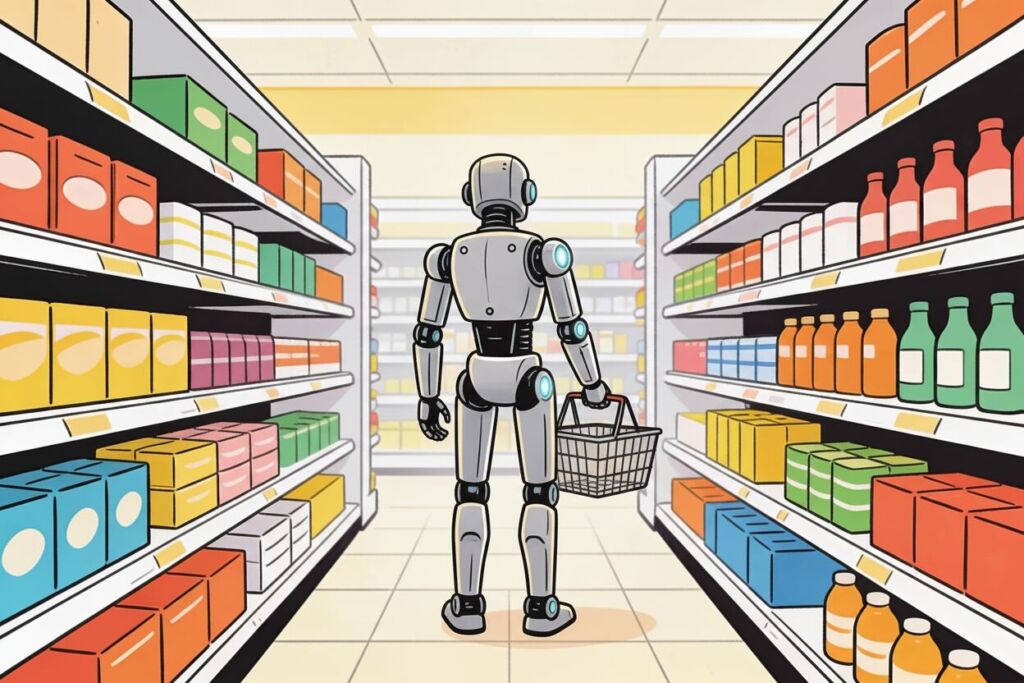
"The biggest running quip at CES ’26 is about humanoid robots that can barely wash dishes. If you were starting from scratch to invent a machine that washes dishes, you’d invent a dishwasher, not a costly, person-shaped robot whose main job is to load it and press 'Start'.
I keep thinking about the same pattern in ad tech.
We already have purpose-built 'appliances' for the core jobs: programmatic pipes, CTV and video specs, measurement, privacy signals, taxonomies. But there’s a rush toward 'one higher-level interface to run it all' (AdCP-style thinking) that risks becoming the humanoid robot: another orchestration layer, another integration, still constrained by the assumptions it was designed around."
Or, as IAB Tech Lab CEO Anthony Katsur puts it more succinctly:
"When you remodel the kitchen, you don’t burn down the house."
Fact is, from day one, the IAB Tech Lab has played a foundational role in shaping industry-wide standards, helping align the often competing interests of publishers, agencies, and vendors. Does it mean every standard was successful or every protocol adopted? Certainly not. But that’s part of innovation and of the ad tech industry. You can’t tell in advance what will stick.
To quote Anthony Katsur once more: "I think it's early days and there's a lot of talk around agentic and what it could do. It does feel a bit like the South Park underpants gnome episode. Step one: steal underpants. Step two: ? Step three: profit."
Funny? Absolutely. Controversial? Not really.
For those of us on the more pragmatic, programmatic side of life, with a few years of ad tech under our belts, the tone of the IAB Tech Lab’s Agentic Roadmap may simply resonate more. It outlines how AI-driven buying and selling could scale across digital advertising without destabilising existing market structures.
Less FOMO. Less hysteria. Less manufactured urgency. More acknowledgement of how markets actually work.
That doesn’t mean there isn’t urgency. The industry is clearly trying to understand which protocols, frameworks, and approaches will ultimately win out. The urgency-irony is hard to miss.
Today, agents are everywhere… and nowhere. There’s excitement, experimentation, and plenty of demos. But there’s still no real scale.
That, too, feels familiar.
Programmatic media’s early days looked much the same. What started as fragmented experiments eventually matured into today’s beast, providing either a launchpad or infrastructure, depending on your point of view, for whatever comes next.
For the moment, agentic ad tech remains more confusing than conclusive. And it’s only January…
Shirley Marschall is ExchangeWire's weekly columnist; find her on LinkedIn, where she makes sense of ad tech.




Follow ExchangeWire