
Taboola & Columbia University Research Shows GenAI Ads Perform Just as Well as Human-Made Content
by on 29th Jan 2026 in News
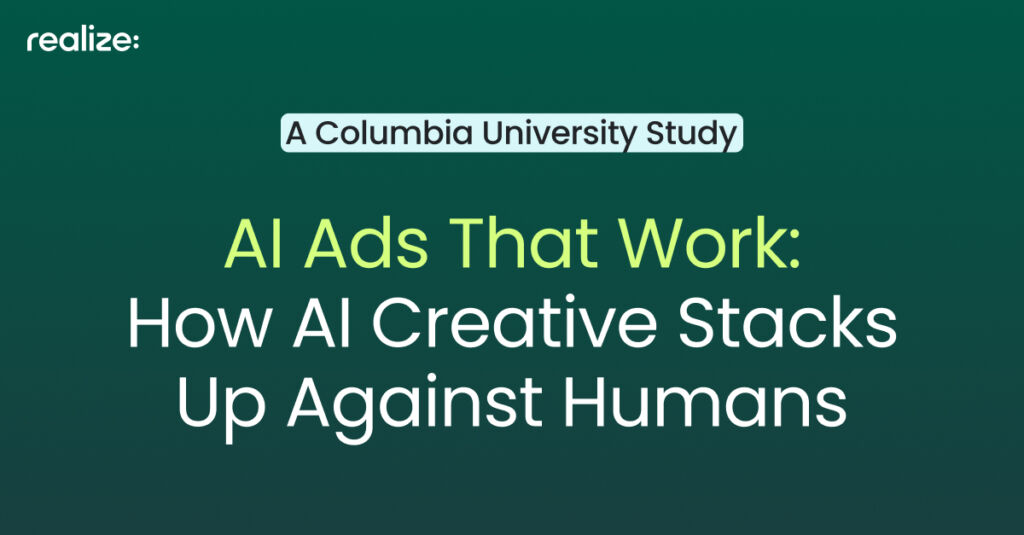
Taboola, a global leader in delivering performance at scale for advertisers, announced the findings of a major field study conducted in collaboration with researchers at Columbia University, Harvard University, Technical University of Munich, and Carnegie Mellon University. The research provides the first-ever look at how generative AI (GenAI) compares to human creativity in driving consumer action by analysing large-scale real-world ad performance.
While GenAI has revolutionised production speed and cost, its impact on actual performance has remained a subject of intense debate. The new study, titled "AI Ads That Work: How AI Creative Stacks Up Against Humans," analysed hundreds of thousands of live ads running on Realize, Taboola’s performance advertising platform, totalling more than 500 million impressions and 3 million clicks.
Key insights from the academic research include:
- GenAI ads perform just as well as human-made ads: AI-generated ads performed just as well as human-made ads. In raw data, AI ads saw a slightly higher average click-through-rate (CTR) (0.76%) compared to human ads (0.65%), though they performed comparably when researchers applied the tightest statistical controls.
- AI ads win the most when they don’t "look" like AI: AI-generated ads that did not "look like AI" achieved the highest engagement of all groups, significantly outperforming both human-made ads and AI ads that were perceived as artificial.
- Human faces are the "secret ingredient" for trust: The study found that one of the most important factors in making an ad feel "human" and trustworthy was the presence of a large, clear human face. Interestingly, based on Taboola’s best practices and policy restrictions, AI-generated ads were more likely to include these trust cues than their human-made counterparts.
- Brands no longer have to choose between speed and quality: AI-generated visuals increased or maintained click-through rates without reducing downstream conversion performance, proving that advertisers do not have to trade quality or conversions for production scale.
- Food, drink, and finance brands were among the first to adopt AI ads: Specific sectors, most notably, the "food and drink" and "personal finance" industries, were early to adopt AI ads.
"Taboola’s platform provided us with a literal gold mine of real-world data that is simply unavailable in a lab setting. By analysing over 500 million impressions, we were able to move past the hype of GenAI and uncover its real impact in large-scale settings," said Oded Netzer, vice dean for research, Columbia Business School. "Our findings prove that when AI is used to enhance human cues—like the trust found in a human face—it doesn't just match human performance; it often sets a new ceiling for engagement."
Methodology
The study utilised a quasi-experimental "sibling ads" approach, comparing matched pairs of AI-generated and human-made ads created by the same advertiser for the same campaign on the same day. This methodology allowed researchers to isolate the impact of the GenAI creative while controlling for external variables like the identity of the advertiser, timing, audience targeting, and landing pages.










Follow ExchangeWire