
The Psychology of Connectivity
by on 24th Mar 2026 in News
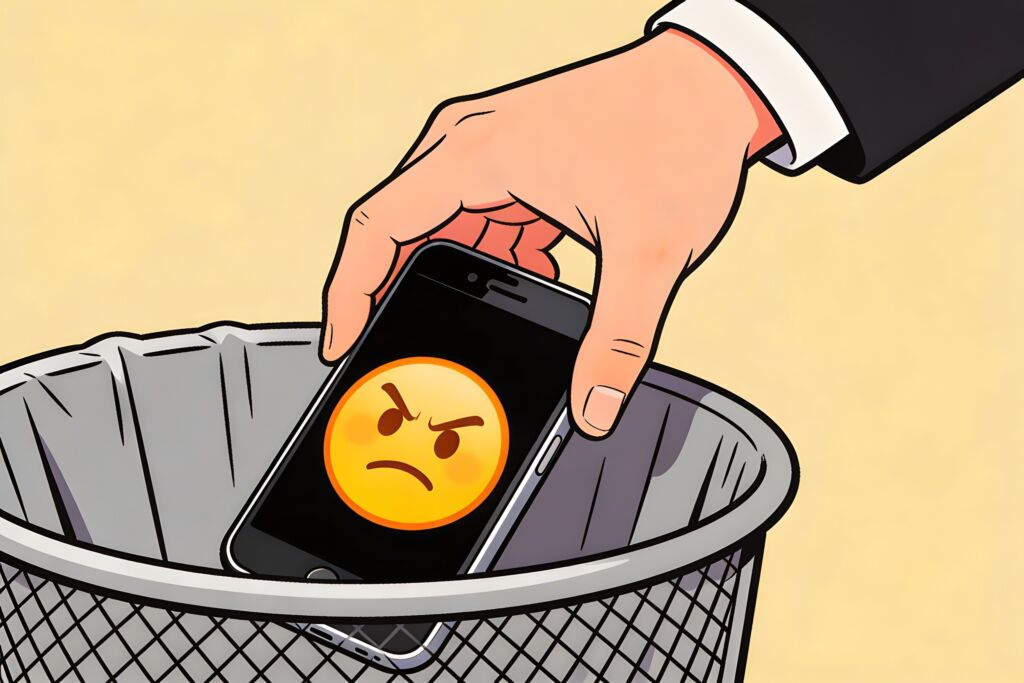
In her first quarterly column for ExchangeWire, Chloe Singleton, group media and influence director at eightandfour, looks at the not-so-quiet feed departure, and why people are increasingly gravitating toward spaces where connection feels more intentional...
Not long ago, social platforms promised us a simple proposition: bring the world closer together.
But in 2026, many users are second-guessing that relationship.

To be clear, that shift isn’t necessarily about abandoning social platforms entirely. It’s about changing how we engage with them – driven by a deeper understanding of the power algorithms have over us. After more than a decade of unchecked feeds, exposé documentaries, whistleblower books, and platform scandals, users are becoming far more conscious of how digital spaces can divide communities and distort realities.
As I sat on my sofa, scrolling Instagram, replying to my friends on WhatsApp, and watching the BBC documentary Inside the Rage Machine, I was struck by the irony. Being reminded in real-time of how algorithms feed us an unstoppable flow of content… while actively consuming it.
It’s a not-so-secret secret that social platforms reward outrage. Algorithms built to prioritise engagement that inevitably feeds off hate.
Careless People, a detailed account of the inner workings of Meta and the human consequences, pulled back the curtain on how the world’s largest social network operates behind the scenes. Combine that with a steady stream of PR storms surrounding Meta, X and TikTok, we can see how that’s contributed to a growing sense of distrust.
The result? Platforms feel less like communities and more like infrastructure - built on profit, influence, money and power.
When the algorithm dictates your lifestyle
Mainstream media is now actively examining these 'black box' systems – the mechanics that determine what we watch, buy, and how we consume information (or misinformation).
And the darker side of this attention economy is becoming increasingly visible.
I’m sure most of us have watched, read, or at least seen snippets from Louis Theroux: Inside the Manosphere which explored online communities promoting hyper-masculinity and "red-pill" ideology.
What it reveals is not just the existence of these communities, but the mechanics behind their growth.
That rage-based algorithm? It’s everywhere in the documentary.
Provocative content spreads faster. Controversy travels further. And attention becomes a profitable commodity.
Intentional: the word of 2026
As users become more aware of these dynamics, their behaviour online is shifting. People are increasingly gravitating toward spaces where connection feels more intentional and less mediated by opaque systems.
One of the most interesting developments in this shift is the rise of private or semi-private social infrastructure.
Broadcast channels, messaging groups and opt-in communities are becoming an increasingly important layer of the social internet. These environments have the golden ticket: they bypass the algorithm entirely, with the choice to join sitting firmly in the hands of the user.
The connection is explicit, rather than engineered.
I’ve become a big fan of Broadcast channels – from movie-based communities to hyper-local neighbourhood updates. I’m not alone, and the numbers back it up: now reported over 1.5 billion messages are exchanged every month, with engagement typically around 15% higher than traditional feed posts.
These environments open up a very different model of audience engagement – one rooted in choice not interruption.
Community connections are a need
But private channels are only part of the story.
I have no doubt you’ve been inundated with LinkedIn posts about Reddit’s rise, and for good reason.
The platform is seeing renewed momentum - driven by its refreshingly human takes, its growing influence in LLM citations and AI summaries, and its dominance in high-intent search.
Reddit flips the traditional model on its head. Communities reward credibility and expertise, not just visibility. And that word again: intention. Purposeful participation.
Direct opt-in = attention quality
A similar dynamic is unfolding through platforms like Substack.
Once considered a niche publishing platform, Substack has rapidly become a major force in media consumption. The platform now reaches around 35 million readers, with more than 3 million paying subscribers, and recently ranked among the top three most downloaded apps in the News category.
What Substack offers is something increasingly rare online; direct relationships between creators, journalists and audiences. Without engineered feeds dictating visibility, readers subscribe with intent, often paying for access to perspectives they trust.
The new psychology of connectivity
And thus, we enter the new psychology of connectivity.
A world where the pendulum is swinging towards purposeful communities and semi-private spaces. These developments point to a deeper transformation in how people think about digital connection – and it feels positive, hopeful.
But what about the unchecked, algorithm-run feed-based platforms?
Meta. X. TikTok. Platforms flooded with AI slop, misinformation, political tripe, and content that ranges from toxic to borderline problematic?
When you list it out like that, it doesn’t exactly scream worth saving.
And yet… is it?
Can even the darkest corners of social be lightened?
I don’t have the answers to fixing big tech - and I don’t have a direct line to the tech bros running them (shock). But it’s clear that any meaningful change would require a mammoth effort across technological, regulation and platform design.
For now, though, let’s happily live in our wholesome Broadcast channels, our niche sub-Reddit safe spaces and our trusted Substack subscriptions.
AttentionPlatformsSocial MediaSocial Networks







Follow ExchangeWire