
Automation vs Control: Striking the Balance with AI
by on 26th Feb 2026 in News

Advertisers are faced with the option of handing over more direction than ever to AI platforms, tools, and solutions. The agency landscape is certainly feeling the effects – with WPP just the latest to announce a radical restructure. Amid the changing tides, how can advertisers maintain control?
Advertising has always been about control: moulding a specific brand image to attract a certain demographic, planning a campaign around a specific event, crafting the perfect ad to lure in a target audience… With so much of the advertising process now automated, have advertisers relinquished this power?
According to an IAB report published last year, almost half of advertisers were already using generative AI to build video ads midway through the year, and 86% of buyers were using or planning to use it to build video ad creative. AI is now fully embedded into the entire advertising process, from the creation of ad creatives to campaign optimisation.
Big Tech is certainly pushing the move towards a more automated future. Midway through 2025, Meta announced its plans to fully automate the advertising process for advertisers on its platforms by the end of this year. Already, AI is being encouraged as the default.
Despite advertisers doing less of the heavy lifting themselves, they are still responsible for the outcomes they are producing, just as much as ever before. Is their role in shaping them narrowing?
Agencies in trouble
As more processes within advertising become increasingly automated, the ad agency world has found itself in trouble. Agencies are facing pressure from the rollout of AI tools that reduce the need for agency staff. Meanwhile, the ease of using many AI tools has led some brands to decide to take on marketing efforts themselves, instead of hiring agencies.
As a result of AI, there is less manual, time-consuming work to carry out. The industry has shifted from much more labour-intensive towards a model centred around efficiency and strategic oversight.
Just today, WPP announced a sweeping restructure involving the selling of assets and further job cuts to counter the threat of AI. CEO Cindy Rose commented that the group had identified several assets it wants to shed, although these have not yet been named. The goal is to achieve £500m worth of annual savings by 2028.
Looking back over the past year, figures from the Institute of Practitioners in Advertising (IPA) revealed that the UK ad industry underwent its biggest ever exodus of staff: its number of employees declined by more than 14% in 2025. Younger workers were the most impacted by the cuts, with the number of employees aged under 25 falling by a staggering 19.2%.
Overall, the number of job roles advertised for the sector across all levels of seniority fell dramatically, dropping by 41%. This figure was led by a decrease of almost half at creative agencies, which are currently those most at risk from the generative AI boom.
Even the financial aspects of the agency model are changing: agencies have traditionally billed the clients according to the number of hours their employees work, but with the nature of a lot of the work having changed so dramatically, many have now moved towards other compensation models which focus on the scope of the work delivered, rather than the hours taken to complete it.
Humans at the helm: Setting boundaries and striking the right balance
But the industry knows: we still need humans. People are still required. This means that many roles are evolving. In many cases, people are needed to carry out new tasks, as new ways of working emerge and become the norm.
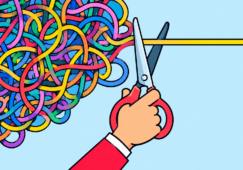
This ties us back to keeping control. Humans are needed to oversee automated steps, to add creativity, and importantly, to set boundaries.
From a consumer perspective, obvious over-automation of the creative elements of a campaign can be a massive turnoff. More than ever, in this age of AI, consumers want to see human flair shine through an ad campaign. Human creativity is at the heart of any truly impressive campaign. It’s one thing to let AI do the heavy lifting – it’s another to let AI take the reins completely.
Many brands have been shamed for their, shall we say… bold uses of AI for campaign creatives.
In the lead up to Christmas, McDonald’s pulled the plug on an AI-generated ad which described the season as “the most terrible time of the year”, following considerable consumer backlash. One social media user took the opportunity to call out “AI slop”.
Elsewhere, Coca-Cola also came under fire over an AI-generated Christmas ad featuring several trucks which seemed to take on different designs as the scenes of the ad progressed. Top comments on the video posted by CocaCola’s YouTube channel include “The most profitable commercial in Pepsi’s history”, and “Nothing says Christmas quite like ‘Dad got fired because AI replaced him to do animation.’”
Other users called Coca-Cola’s ad “soulless” and “dystopian”. Another commenter summed it up pretty well: “just because you can, doesn’t mean you should”.
Intentional AI
Building on this, brands and advertisers should make sure their use of AI is intentional. This is the best way to keep control. As more options become available and more tech buzzwords emerge, knowing how much to automate is invaluable. Are you using a technology just because it’s being hyped right now, or because it’s genuinely improving workflow and helping you create quality output?
When deciding whether to optimise a part of a campaign or a process behind the scenes, consider whether automation is the right route to take. Is automation actually the best way to do it? Not just the easiest, but the one that will produce the best result. When it comes to creative, the answer will often be no.
Figure out the best ways to integrate AI seamlessly, enhancing the work of team members, rather than replacing it.
As AI seeps into every area of the industry, be intentional. Where budget allows, put the focus on producing creative outcomes to be proud of – which will likely speak for themselves when it comes to sales and ROI – rather than cutting corners under the guise of efficiency.




Follow ExchangeWire