
You’ve Got Mail… and it's Filled with Ads!
by Shirley Marschall on 3rd Dec 2025 in News
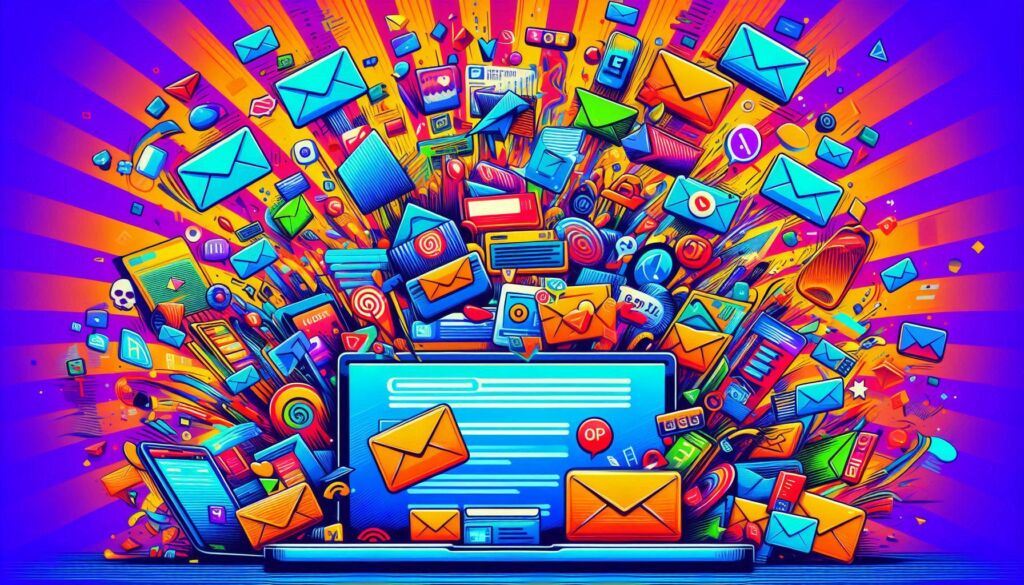
In her weekly column, Shirley Marschall takes on 'the Swiss Army knife of communication': email...
"I turn on my computer. I wait impatiently as it connects. I go online, and my breath catches in my chest until I hear three little words: You’ve got mail." It’s the wonderful, famous line from the 1998 rom-com You’ve Got Mail, named after the greeting AOL users heard when a new email arrived.
Ok, admittedly a lot has changed since then. Not only did we stop holding our breath for emails, but dial-up is ancient history and AOL… well, let’s just say its cultural relevance didn’t quite survive the millennium.
But email? Email stayed. The Swiss Army knife of communication: 50+ years old, reliable, multi-functional, indestructible. Technologies have come and gone, switches flipped again and again, but email is still standing, and even growing.
You may have moved cities, crossed oceans, changed physical addresses, swapped country codes but your email followed you everywhere. Sure, maybe you transitioned from im.a.super.cool.teenager@hotmail to the more grown-up pragmatic.full.name@gmail, but that’s usually the extent of the evolution.
Your email is the key to your apps, logins, communication, receipts, security checks. It holds years of personal data, unlocks doors you long forgot about, and lets ghosts of the past find you ('Hey! It’s your 20-year high-school reunion!'). Anyway…
This time of year, most inboxes are an eclectic mix of 'buy now' and 'your order has shipped', along with holiday greetings, newsletters, and the occasional invoice. Plus the inevitable spam and scam collection.
And then there’s the work inbox: "Hope this email finds you well", meeting invites, reply-alls, and a steady stream of cold mails.
When thinking about email in a marketing and advertising context, the first thing that comes to mind is the martech classic: a brand sends its own promotional email to a list of people who opted in. Straightforward.
In ad tech, though? Email has always been the backbone of identity. The universal connector. The hashed common denominator passed from advertisers to publishers to CDPs, DMPs, DSPs, SSPs or whatever acronym is currently in fashion. Matching, stitching, excluding, building lookalikes… the usual targeting recipe.
But email as an ad tech channel? Admittedly not the first thing that comes to mind.
Still… if everyone is already obsessed with capturing email addresses, why let that goldmine be used only for targeting?
Ciaran O’Kane argues: "The open web is contracting. Referral traffic has been obliterated by Google and shifting consumer behaviour. The open web is in decline, but the open internet is not. DOOH, retail media, app, audio, CTV - these are the overlooked ecosystems that make up the open internet. One of the most underserved spaces is email."
He continues: "The problem with email ads is myriad: it’s a unique and complex ecosystem; it’s underserved by ad tech; and buyers have no idea how to activate it. And yet the opportunity is significant."
A fair and interesting point. But since this isn’t exactly ad tech’s daily bread-and-butter, let’s define what "email ads" actually mean.
Type 1: Email Inbox Ads
Not sent by a brand directly, these appear inside your inbox, placed by an ad tech platform. Makes sense: any free, ad-supported product might as well be an ad tech channel, right?
Except… ad tech wouldn’t be ad tech if there wasn’t a second definition.
Type 2: Ads in Emails
Think email publishers, email ad networks, or simply publishers monetising their newsletters with programmatically inserted banner ads.
Email ads, email with ads, email inbox ads… what they all have in common are two topics no one in digital can escape: privacy and AI (of course).
As Ana Mourão, Martech and data expert, notes: "Email metrics are being impacted by email service-side privacy filters (email opens especially). And now AI summaries are starting to impact creative (especially copy), so there are fewer levers in email marketing compared to just a few years ago."
So let’s double click on Type 1: Email Inbox Ads
Inbox ads require an ad-supported email provider. Easy, the biggest one is Gmail (simultaneously though this requirement excludes most corporate inboxes).
Hm, are you using Gmail on Apple devices, now staring slightly puzzled at your mail app wondering, "So why do I never see ads?" Well, that’s because Apple Mail strips Gmail’s ads entirely, in its characteristically "annoying" privacy-protective manner. Annoying to ad tech, very delightful to consumers.
And given that Apple Mail is the leading email client globally, followed by Gmail, and considering the global mobile duopoly where Android holds ~70% and iOS ~29%, but iPhone dominating 50%+ in US/UK/Canada… inbox ads quickly shrink as a reachable channel.
Add AI and Google’s recently announced Gemini integration in Gmail to the mix. Which unleashed a confused reaction: "Wait… GenAI is reading and training on my emails?" Some users will opt out of smart features, but time will tell how this plays out for Gmail overall.
On to Type 2: Ads in Emails & Newsletters
This category has never been more relevant. With shifting algorithms on social and search, endless scrolling and AI slop everywhere, people flee the open web. And newsletters, the safe haven from all this madness, are booming. They’re stable, owned, direct, calm and trust-based.
And advertising money supporting email publishers, writers and (no, let’s not use the word creators)… sounds compelling. Especially since, that’s income that doesn’t rely on platform volatility. Really hard to argue with that win-win scenario. Besides, ads in newsletters is a bit like influencer marketing but for grown-ups, right?
So… is email an underrated or overrated ad tech channel? You decide. Admittedly, it might not be the sexiest channel in ad tech, but it’s certainly one of the most persistent ones. If you go for it, just make sure to respect this personal space with a less-is-more ad tech approach.






Follow ExchangeWire