
Advertising, the 'Medium-Old' and the Smell of Gen Z Spirit...
by Shirley Marschall on 4th Feb 2026 in News
Sorry, kids, Shirley's column this week is all about the over-40s. Is advertising missing a trick in focusing on youth?
This one's for the 40+ crowd...
To the generation that’s not old, not quite young anymore…the "medium-old" (referred to here as we/us), here’s a theory:
What if the advertising industry’s obsession with Gen Z exists, at least in part, because older generations like Gen X and Millennials are simply harder to influence?
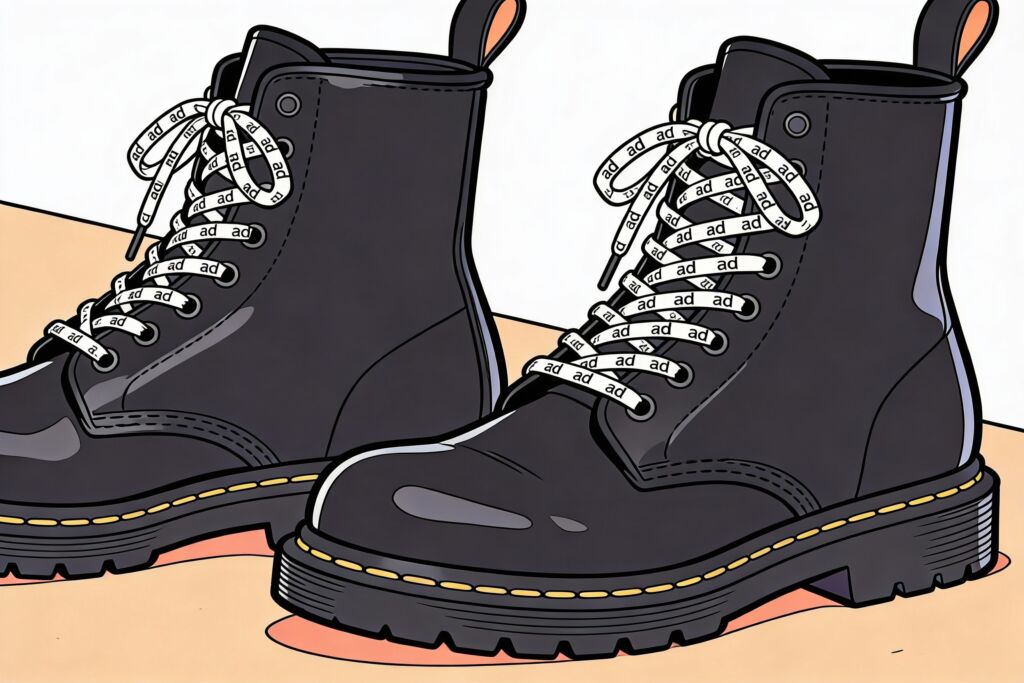
A little personal story: A few weeks ago, I went shopping and spontaneously bought a pair of Doc Martens boots. The last pair I owned was in high school, as a teenager. Back then, my parents brought them back from a trip to London, and I loved them. My Docs and my green parka were my grunge-era uniform. You know, Nirvana, youth, rebellion.
The other day, I put on my brand-new Docs and glanced in the mirror. Same boots. Same green parka. After all these years, my look hadn’t changed all that much.
That moment stuck with me. Because my choice had nothing (at least not consciously) to do with trends, influencers, or ads I’d seen recently. It was based on memory, early-established fashion preferences and culture but minus nostalgia in the sentimental sense, as I don’t spend my days longing for high school.
So I went out into the world (LinkedIn) and asked: "Can medium-old consumers still be influenced in the same way younger generations can?" Turns out I’m not the only one with a theory.
Quoting my grunge-days friend and marketing expert, Negin Neghabat-Wolthoff: "The 90s are clearly having a comeback (at least for those of us who still consider ourselves influenceable). I now own Doc Martens again. Is that nostalgia, or am I influenced? And if I am, is it by a fashion trend, or (and this terrifies me) by what Gen Z is wearing? And the idea of other generations being influenced by what Gen Z is wearing certainly explains part of the obsession with marketing to Gen Z first and foremost."
Even so, influence works differently at this stage of life. We tend to be less influenced by "what will people think," by what’s currently considered cool and yes, by advertising. We’re digitally fluent, but this is the been-there-done-that stage of life, where social media gets replaced by retail apps, and patience for algorithms wears thin.
We’ve tried our fair share of brands. Not just in fashion, but across categories: food, FMCG, everyday products, cars, high-value purchases. We’ve been shaped by local markets, global chains, and international brands. We’ve experimented, switched, been disappointed, settled, and repeated the cycle. And we carry more history, more expectations, more habits, mixed with less future potential.
That doesn’t mean we’re stuck in time. But it does mean we’ve accumulated experience, preferences, taste and habits. All layered on top of the larger than life brands that dominate our lives anyway, the A or B choices. Coke vs. Pepsi. iPhone vs. Android.
Of course, we can still be persuaded to buy the latest version of our favourite deodorant brand, now promising not 24, not 48, but 72 hours of shower-fresh confidence (who could possibly resist). But what matters isn’t the claim, it’s the brand.
Which raises the question: is the industry’s obsession with Gen Z really about influenceability or about unfinished consumers? With less history, fewer habits, and far more future potential.
Or is there even more under the hood? Judy Shapiro, CEO of Topic Intelligence, made a compelling case: "While older consumers are more established in some categories, they are just as influenced by marketing as younger audiences in categories that are newer or emerging. So the premise of the question requires a rethink. What influences older and younger audiences to purchase? The answer is the same for both: exposure to the right topics to trigger an action. This approach is demographically blind and far more effective than demo targeting."
Or maybe, we’ve turned into our boomer parents, stereotyping the generation that comes after us, and we simply don't get it? Ana Mourão rightly questions if younger generations might not be more influenced at all. They may simply be using their own memories and early-established preferences, ones we don’t yet recognise or understand.
If that’s true, then advertisers pouring the majority of their budgets into Gen Z might be stuck in the same wishful boomer thinking. Or maybe this is what generational hype cycles are in the first place. Mark Pilipczuk makes a good point: "If Gen Z is born between 1997 and 2012, that includes people who are turning both 29 and 14 this year. Do those people have much in common? Objectively, no. But "thinking" in generations sounds smart and kind of scientific and is easy to put on a slide in a pitch."
Another possibility? As Kristin Sullivan-Stoesser wonders, maybe we were influenced by influencers too, just a different kind. The popular kids at school, MTV, print magazines. Pop culture that was mass rather than micro-targeted. Today’s influence is algorithmic and fragmented, but the core mechanism may not be that fundamentally new.
Or the explanation is far more pragmatic. As Vishveshwar Jatain put it, Gen Z has the highest theoretical lifetime value for brands trying to secure their place in the future. Gen X and Millennials may have greater purchasing power in aggregate, but many of the biggest decisions (education, housing, cars, etc.) are already behind them.
And maybe one column simply isn’t enough to settle this matter but a good place to start asking questions.
Shirley Marschall is ExchangeWire's weekly columnist - find her on LinkedIn where she's making sense of ad tech.
Ad SpendFashionGen ZInfluencer MarketingMarketingTargeting








Follow ExchangeWire