
Ads in Chats: Your AI BFF Just Got a Sales Job
by Shirley Marschall on 21st Jan 2026 in News
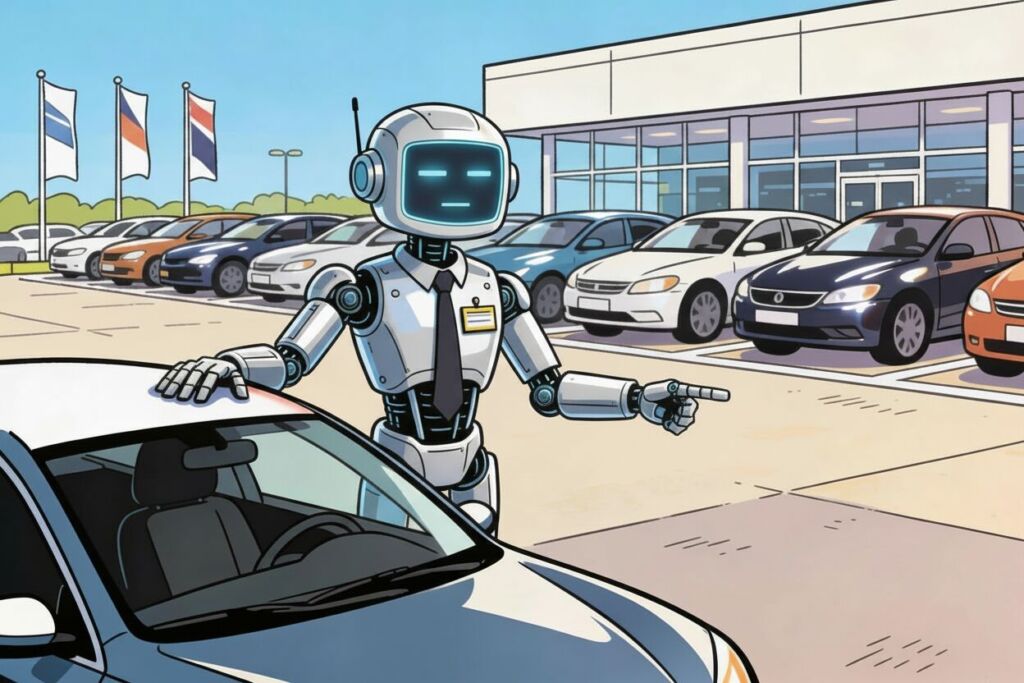
They said it would never happen, but of course it was always going to - ads are coming to ChatGPT. Shirley Marschall takes a look at this little bit of history repeating...
Guys, honestly, there won’t be ads...
Jeff Bezos: "Advertising is the price you pay for having an unremarkable product or service."
Elon Musk: "I hate advertising."
Sergey Brin and Larry Page: "We expect that advertising-funded search engines will be inherently biased towards advertisers and away from the needs of consumers."
Sam Altman: "I kind of think of ads as a last resort for us as a business model."
Reed Hastings: "We want to be the safe respite where you can explore, you can get stimulated, have fun and enjoy - and have none of the controversy around exploiting users with advertising."
Yes, they all said it. We all know how those statements aged. So yes, OpenAI is in esteemed company.
For OpenAI, the decision is pragmatic and unsurprising. AI at scale is expensive. Most users won’t pay. Competitive pressure is mounting, especially as Google aggressively pushes Gemini. And it fits OpenAI’s broader shift toward shopping, consumer features, and positioning ChatGPT as the "everything AI app"…only now with ads.
It does strip OpenAI of its vibes, the AGI narrative, the sentient-assistant fantasy though, doesn’t it? After all, ChatGPT is now being compared one-to-one with search. A tool. And maybe that’s a healthy development. Less hype, less stickiness, more vanilla?
As for OpenAI’s claim that "the best ads are useful, entertaining, and help people discover new products and services"… only someone in advertising could write that. Let’s see how well it ages.
Anyway, the advertising industry is excited. Remove the miracle language and shiny-object hype, and this boils down to unlocking an entirely new channel with enormous attention. If done right, this could become the most personalised form of advertising we’ve seen. Not based on keywords, but on real intent, real questions, and real moments of decision inside conversations. That’s genuinely promising, especially if the 'there will never be ads' success trend replicates itself.
But while the industry debates formats, CPMs, and whether ads will feel 'intrusive,' the more important question is simpler:
What happens to the user?
Because advertising doesn’t just monetise products, it also reshapes incentives. We’ve seen it transform search, commerce, and social feeds. So what happens when reasoning itself is optimised for ads?
For two years, ChatGPT trained millions of people to expect something clean: no sponsored results, no hidden agendas, just (mostly) helpful responses. That trust became a real competitive moat.
And now? Users may start questioning every answer. Is this suggestion genuinely helpful, or commercially convenient? Once that doubt creeps in, trust doesn’t erode, it evaporates. For OpenAI, still leading the AI chat category by usage, that’s a real risk. Are ads worth potentially losing users and this trust premium that made the product so valuable to begin with?
And won’t OpenAI’s ad success also depend on how people actually use ChatGPT? Recent research frames usage patterns as Asking, Doing, and Expressing. Ads may fit naturally into some of these modes but feel deeply wrong in others.
And what about users who don’t treat ChatGPT like a tool but like a companion, a confidant, a BFF or sometimes even a romantic partner? An ad-supported friend might trigger even more backlash than when ChatGPT "lost" its personality. Will these users accept that their friend now has a sales rep job, blurting out ads mid-sentence?
Will users accept a Netflix-style ad tier for the free version and pay to escape ads? Will they switch to competitors offering ad-free positioning? Or will habit win out?
Sofie Sue Rutgeerts sums up this ad test balloon nicely: "From a consumer psychology perspective, trust, fairness, and relevance will determine if ads enhance engagement or erode it. Excited to see how OpenAI balances user experience with monetisation - a fascinating experiment for the AI and ad industry."
One more thing: Google. Or more precisely, Gemini.
On January 14th, Google announced personal intelligence inside Gemini. A launch that didn’t get nearly the airtime of a model upgrade, yet it represents "data is power" in its purest form. Decades of searches, emails, files, photos, locations, and preferences are now available as working memory.
And with Gemini, privacy, paradoxically, feels easier. The question shifted from "do I want to give an AI my data?" to "Google already has it, I might as well get something useful in return."
Add Apple integrating Gemini, the modern equivalent of making Google the default search engine in Safari, and Gemini’s push into agentic commerce with the Universal Commerce Protocol (UCP), and the strategic picture sharpens quickly.
Notably, Google has no plans for ads in the Gemini app - yet.
Eric Seufert questions whether Google ever needs to: Gemini output is already monetised at parity with classic Search through AI Overviews and emerging formats like Direct Offers. Why insert ads into the chatbot at all?
As Seufert puts it, withholding ads may create a war of attrition driven by consumer expectations and capital asymmetry. Google can afford to sustain losses indefinitely in the chatbot while monetising elsewhere. Why risk the experience?
So maybe ads in AI chats will work brilliantly. Maybe this becomes a critical new marketing channel, and competitors follow OpenAI’s lead.
Or maybe, as Dan Gee predicts, it follows a familiar arc: early success, minimal disruption, then sustained commercial pressure slowly degrading the user experience. The enshittification 101 playbook. The difference is that ChatGPT doesn’t benefit from the same switching costs as social platforms. You’re not there because your friends are.
While we wait to see how everything unfolds, get popcorn and watch Black Mirror Season 7, Episode 1: "Common People." Enshittification in its purest and most disturbing form.
AdvertisingChatGPTOpenAISearch





Follow ExchangeWire