
How Should Advertisers Navigate the New Era of Conversational AI?
by on 29th Jan 2026 in News
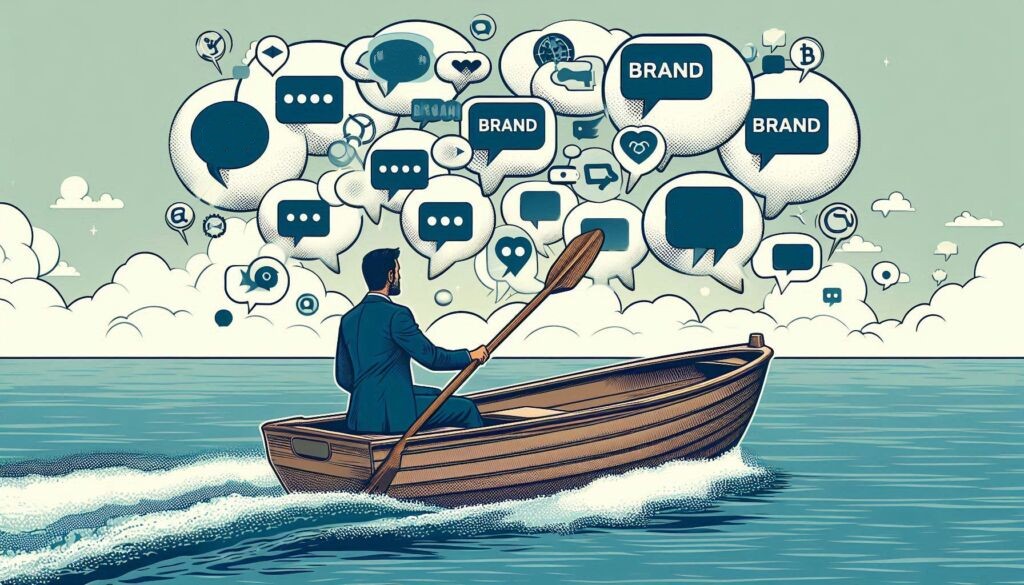
We examine the introduction of advertising to ChatGPT and what it could mean for advertisers, consumers, and the wider AI ecosystem, calling on a range of industry experts for their insights.
Advertising is entering a new phase as OpenAI begins testing ads within ChatGPT, marking a significant shift for one of the most widely used AI products in the market. Ads are currently being trialled with US users on ChatGPT’s free and Go tiers, a move that many in the industry had long expected.
The decision reflects a response to financial pressure. Operating AI at scale is costly, most users remain unwilling to pay, and competition is intensifying as Google accelerates the rollout of Gemini across search, shopping, and personal intelligence.
For advertisers, the opportunity is framed around contextual relevance. Ads in ChatGPT are designed to respond to the immediate intent behind a user’s query, rather than relying on long-term behavioural data. This positions conversational AI as the next evolution of contextual advertising, where brands are expected to integrate into the flow of dialogue rather than interrupt it. However, early signals around pricing, control, and brand safety suggest the model will require careful testing and adaptation.
From a user perspective, the introduction of ads represents a meaningful change. For over three years, ChatGPT has operated without sponsored content, training users to expect clean and largely unbiased responses. The presence of advertising raises questions around trust and how users will interpret recommendations within conversational environments.
We asked a range of industry experts where the real opportunity for advertising in LLMs lies, whether brands should move quickly or cautiously, and how ad tech can establish a foothold in this emerging environment…
Adding value rather than disrupting
The opportunity for advertising in AI environments like ChatGPT is fundamentally around context (and intent). These platforms capture moments of deep attention, where users are actively seeking answers. If advertising shows up in a way that aligns with that moment, it has the potential to add real value rather than disrupt the experience.

That said, the focus should always be on relevance, user experience, and understanding where advertising genuinely makes sense.
My belief is that the winners will be those built to truly understand contextual. AI changes how people discover information, while contextual intelligence ensures advertising remains safe, relevant, and effective within it.
Jess Aylett, Head of Sales, UK & International, GumGum
Challenging the industry to rethink
AI platforms like ChatGPT are becoming key entry points for search, discovery, and decision-making. This opens up intent-rich advertising opportunities where sponsored responses can drive real engagement if delivered with relevance and utility.
Our initial experiments show advertisers are responding well to formats that enhance user experience rather than disrupt it. Still, platforms won't jeopardise brand trust. Therefore, quality, privacy, and contextual alignment are essential.

For ad tech to gain traction, API level integrations are required. These enable real-time bidding, session-aware targeting, and dynamic response delivery. Creative tools must adapt to conversational flows, supported by standard frameworks for measurement, attribution, and ethics.
Ads in AI represent more than new inventory. They challenge the industry to rethink how advertising appears in this space, moving away from interruption and toward utility. The next era will reward those who can deliver value without compromising user experience or platform integrity.
Frederic Liow, Chief Revenue and Operations Officer, AlgoriX
It’s time to test and learn
One certainty in the AI market is the continued adoption of products such as ChatGPT, Claude, Perplexity, and others by both consumers and businesses to improve productivity. Historically, we have seen advertising opportunities shift toward platforms that achieve scaled engagement, and AI-driven products appear to be following a similar trajectory.
However, these platforms are still relatively new consumer experiences. While they are evolving rapidly, it remains to be seen how advertising can be integrated in a way that preserves a clean, high-quality user experience while still delivering effective brand or performance-based outcomes.

Advertisers should begin testing and learning within these environments as part of their normal investment cycles. The gradual move from traditional search results pages to AI-generated responses is likely to pose a significant challenge for established ad tech providers, particularly as they face increasing disintermediation.
Nick Flood, SVP, Product, Shinka
The opportunity is trust
The opportunity isn’t reach – it’s trust. AI interfaces are becoming decision-making environments, not just discovery tools. In that context, video has a unique role: when it’s high-quality, contextual, and useful, it reinforces credibility rather than interrupting it.

Only advertisers with discipline should move quickly. Showing up too early – without relevance, transparency, or value – risks undermining brand equity. In AI, a well-timed explainer or contextual video can feel like an answer, a misplaced brand mention feels like noise.
Ad tech can get a foothold by designing trust-first systems that prioritise clear disclosure, brand safety, and strong adjacencies. In AI environments, credibility drives performance. Without trust, even the best placement, or video, won’t matter.
Brian Cullinane, CCO, VideoElephant
Entering an era of intent-based orchestration
We are moving from an era of manual 'campaign management' to one of intent-based orchestration. While general-purpose LLMs are becoming the primary tool for generating ideas, it cannot replace the professional environments required for high-stakes media execution. The real opportunity for ad tech isn't found in a chatbot's interface, but in the intelligence layer that sits between intent and transaction.

Advertisers should not be looking to bypass their platforms for an LLM; instead, they should demand platforms that harness AI agents to handle the complex, real-time negotiations of modern trade. The future of the industry belongs to those who build 'vertical intelligence' – specialised environments where AI handles the heavy lifting of discovery and optimisation under strict human governance. By keeping the user at the helm of a domain-aware platform, we ensure that while the workflow is conversational, the execution remains secure, transparent, and built for business-grade commerce.
Jeffrey Mayer, CPO & Managing Director US, DanAds
We’re unlikely to see a huge impact on budget allocations in the short term
OpenAI’s move to enable advertising on its flagship product was inevitable given the company’s urgent need to reduce its burn rate. ChatGPT ads will compete directly with search, which is good news for advertisers, but I don’t expect a huge impact on budget allocations in the short term.

In order for its ads business to make a significant impact on the top line, OpenAI will need to work on its ad tech stack (especially measurement), e-commerce partnerships and advertiser relations. Even if they are an exceptional company by any measure, this will take time. How many years did Amazon need to scale its ads revenue?
Mattia Fosci, CEO at Anonymised
The key is to partner strategically
Advertising on AI platforms like ChatGPT has the potential to offer brands a huge opportunity to reach highly engaged audiences in new, interactive ways. Historically, ad-supported models follow the audience, and AI is no different, and will be essential to ensuring the commercial viability of these platforms.
However, any ads integrated into AI platforms, even those designed to feel conversational, need to be fully transparent and provide genuine value to both users and brands. Without that, trust could be undermined and early advantages lost completely.

AI-enabled workflows are enabling brands, no matter the size, to build more complete and performant marketing funnels by leveraging their speed and efficiency to drive better marketing outcomes. The key is to partner strategically with those who can add some level of unique and genuine value to these processes. Advertisers should test and iterate rapidly, and understand impacts on their technology stacks now, so they’re ready to scale as AI-driven advertising becomes more mainstream.
Simon Shaw, CEO, Fifty
Solving users’ problems in real time
The shift from 'search terms' to complex, paragraph-long prompts has unlocked a level of consumer intent that traditional search simply cannot touch. This 'contextual gold mine' represents a paradigm shift in digital engagement. While legacy display ads struggle with sub 0.5% click-through rates, AI native infrastructure is already delivering CTRs as high as 5% by matching ads to the specific logic and nuance of a conversation.

Should advertisers wait? In short: No. As major LLMs open their gates to advertising this year, the 'first mover advantage' has become a 'first mover necessity'. Early adopters aren't just buying impressions; they are arbitraging on underpriced attention before the space becomes crowded. Thrad is at the forefront of this transition, providing the essential rails for brands to secure their presence within these conversational flows.
The foothold: to win in this new era, ad tech must move beyond the banner and into agentic commerce. The objective is to transform simple chatbots into transactional engines. By enabling a seamless intent to action funnel, advertising no longer interrupts the user, it actually solves their problem in real time.
Andrea Tortella, CEO, Thrad
Ad tech needs to move away from just counting impressions
AI is not just another channel. It changes user behaviour itself. People stop 'searching' in the classic sense and start asking questions, expecting a single, structured answer. That means fewer touchpoints, fewer impressions, and much higher competition for visibility inside those answers.
That is why advertisers should get involved early. It is not only about keeping up with competitors. It is also about understanding how fast the technology behind AI is evolving. Those who start working with it now can learn much earlier how discovery, intent, and decision-making will change in an AI-driven environment, and how to use this shift to reach the right audience more effectively.

Another key point is trust. AI systems will prioritise signals like relevance, credibility, and long-term user satisfaction. This pushes advertising away from aggressive formats and closer to usefulness, context, and value. Brands that understand this early will have a serious advantage.
Ad tech needs to move away from just counting impressions and focus more on real results inside AI platforms. This means building tools that work directly with AI, understand user intent instead of keywords, and don’t hurt the user experience. Companies that see AI as a new foundation for advertising, not a risk, will define what comes next.
Emin Alpan, CEO, Aceex
The foothold is infrastructure
Ads are coming to LLM interfaces, and the biggest opportunity isn’t replicating search; it’s influencing the moment of decision inside the conversation.

As consumers ask AI agents to compare options, narrow choices and even complete purchases without ever visiting a site, the old handoff to search results and landing pages breaks. That’s where brands will want to show up: with contextually relevant placements that feel like help, not interruption, and can be measured to performance-based outcomes.
Advertisers shouldn’t rush in blindly, but they should start testing now. Treat it like early CTV or retail media, learning what formats, signals and creative actually move consideration and conversion in an agent-led journey.
For SSPs and DSPs like Nexxen, the foothold is infrastructure – privacy-safe identity and consent, product and commerce integrations and full-funnel measurement that connects AI-driven recommendations to real-world impact.
Eric Solomon, Senior Vice President, Product – Data, Nexxen
AdvertiserAdvertisingAIChatGPTConversationalDisplay






Follow ExchangeWire