
Mirror, Mirror… Are LLMs the Fairest of them All?
by Shirley Marschall on 29th Apr 2026 in News
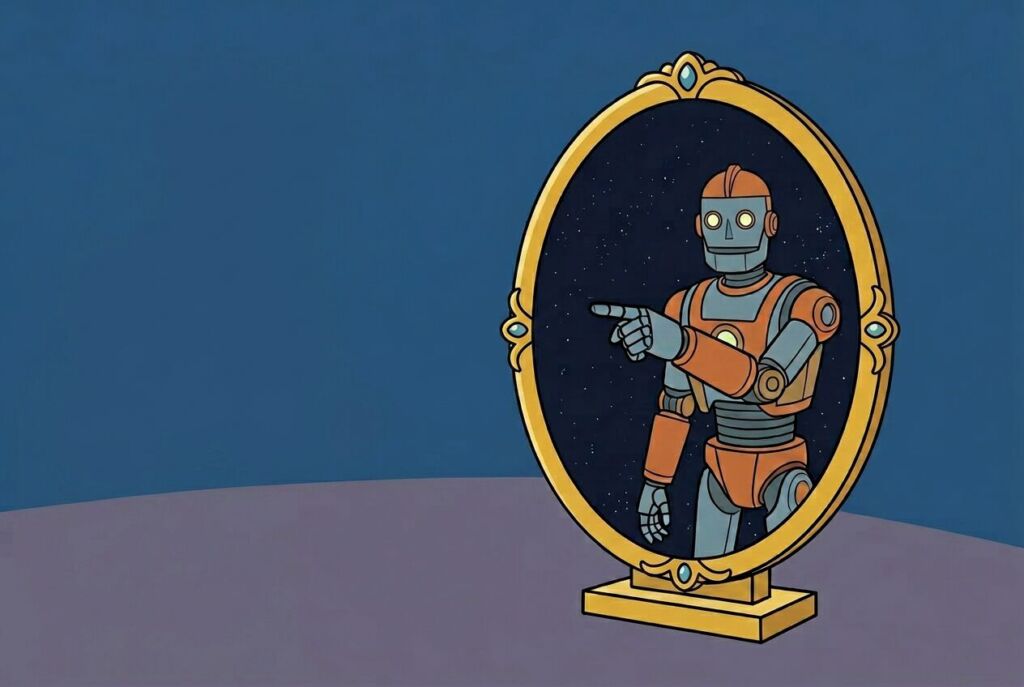
Shirley Marschall is back, and this week she's looking at why LLMs are the question, the magic mirror and the answer in the latest ad tech fairy tale...
Evil Queen: "Mirror, mirror on the wall, who’s the fairest..."
Mirror: "You should ask an LLM."
Evil Queen: "But you didn’t even hear the question!"
Mirror: "Didn’t need to. The answer is always to ask an LLM..."
Snow White would be a very different (and much shorter) story if told today, with the magic mirror having a single, pre-loaded answer to it all: "Use an LLM." No need to wait for the question because it doesn’t matter what you ask. It doesn’t matter whether the question is existential or operational, strategic or trivial. The answer is always the same.
An LLM.
What will save humanity? LLMs. What will destroy it? LLMs. Cure illness? LLMs. Eliminate all jobs? LLMs. Best way to shop? LLMs. Book a restaurant? LLMs. Best doctor? LLMs. BFF? LLMs. We can keep playing this game or just ask an LLM to generate more examples.
We’re asking different questions and getting the same answer back. Over and over again. LLMs. Large language models: the mirror and the answer, two in one, which sounds efficient (that’s if you ignore potential conflicts of interest or bias problems).
Anyway, in advertising the exact same thing is happening. Best creative creation? LLMs. Best media planning? LLMs. Best ad placement? LLMs. Media buying? LLMs. Measurement? LLMs. Which also works the other way around: Cause for slop? LLMs. Cause for fraud? LLMs. Ad spend waste? LLMs. Guess what’s the solution to all these issues. Right, it’s… LLMs. Again.
But what we’re calling 'AI' or 'agentic' in most industry conversations today isn’t AI in its full breadth. It’s a very specific slice, LLMs / GenAI (ChatGPT, Claude, Gemini, and others), stretched across every possible use case.
Meanwhile, other forms of AI, such as machine learning, the quieter, less glamorous infrastructure, fade into the background… Ugh. Not new enough. Not visible enough. Not interesting enough. Not PowerPoint-sexy and certainly not boardroom approved.
Today, everything has to happen in natural language via a prompt. Sure, natural language feels intuitive, but it’s a messy interface. Prompts are ambiguous, context shifts meaning, and the same input can lead to different outputs. It’s not a dashboard where a toggle means one thing… language is open to interpretation. Still, if it doesn’t generate text, hold a conversation, or present itself as a universal interface, it barely registers as innovation anymore and therefore whatever used to be called 'AI' now lands on mostly tone-deaf ears.
So LLMs become the default answer, even where they’re not the right one. Even where more specialised, interpretable systems would make more sense. Optimisation models, recommendation systems, forecasting tools…the very systems that actually made ad tech work in the first place. Which creates a strange inversion. Some of the most reliable, efficient, and well-understood systems in the ecosystem are sidelined because they stopped being exciting. They’re still there. Still faster, cheaper, and far more predictable but they don’t fit the narrative.
And all of this is happening inside something that looks a lot like a mirror room. Mirrored walls, floors, and ceilings. Reflections bouncing endlessly. Signals feeding into models that generate outputs which become new inputs. An environment that starts to feel infinite, coherent, and self-reinforcing but also increasingly detached from anything external that would force it to recalibrate.
Layer on top the constant stream of AI mega-deals, mega-rounds, and mega-earnings announcements, and the effect intensifies. The narrative confirms itself. The momentum feeds itself. Which GenAI company is leading? Which one has the best model? Who said what and when? Layoffs due to AI… great news, if the stock market is the referee.
At the same time, the incentives across the digital ecosystem are starting to diverge. Advertisers and platforms are racing toward LLMs, chasing scale, automation, and the promise of a system that can do everything. Publishers, meanwhile, are trying to read the mirror room. Torn between cutting deals with AI companies and / or trying to keep those same systems out, blocking crawlers, restricting access, pushing back against models that ingest their content while bypassing their monetisation.
One side is feeding the mirror. The other is trying to cover it (sort of).
And the ad tech industry is already building toward its logical conclusion full of prompts and agents. Google has Performance Max and Gemini. TTD has Koa AI and Agents. Meta has Advantage+. TikTok has Smart+. Pinterest has Performance+. LinkedIn has Accelerate. Etc. etc. Different names, same promise.
The system, it turns out, also has a builder. Enter OpenAI, with an ad manager. The timing makes sense: monetisation follows product maturity, except when you have effectively unlimited capital and no particular reason to wait. So you don’t. After all, OpenAI is already moving in this space, while Gemini is sending mixed signals and Claude remains publicly anti-ads. That won’t last forever, and OpenAI knows it.
The partnerships with ad tech vendors (Criteo confirmed, TTD rumoured) aren’t the point. They’re a bridge into the ads business. The actual goal is owning demand directly, and that’s already forming inside ChatGPT. The infrastructure is there. The users are there. Productising it now is just connecting the dots. The LLM ads window is genuinely open.
Now go ahead and feed this column to your LLM. Prompt: "It can’t be true that LLMs aren’t the answer to every question, can it?"
Read all of Shirley's columns here, and find her on LinkedIn




Follow ExchangeWire