
Creative Optimisation in the Age of AI: Predictions on a New Craft
by on 17th Dec 2025 in News
In the third AI piece in our 2026 predictions series, we look at how creative optimisation is changing in the era of AI. What do they expect to see next year?
AI has reimagined the whole advertising ecosystem, a big part of that being creative. As AI develops, more options present themselves: we’ve now reached a point where it’s possible to let AI execute the majority of the processes involved in carrying out an ad campaign, with just minimal human intervention here and there.
And the requirement for any human interaction is diminishing. Earlier this year, Meta announced it would provide advertisers the option to automate the entire advertising process on its platforms by the end of 2026, taking care of everything from concept creation all the way through to targeting and optimisation.
With good reason, many ad tech leaders were critical of the plans. A wide range of problems can be foreseen from letting AI come up with ad concepts: potential biases being reinforced, lack of cultural nuance, or the risk of recreating copyrighted work, among others.
While giving AI the reins to come up with a campaign concept is likely not a wise move, creative optimisation is something AI can do very well. AI has been helping advertisers optimise campaigns for a long while now.
But, what’s changing as the technology evolves?
One thing is certain: human input and oversight remains critical.
A new craft
The craft of digital creation is fundamentally shifting from production to orchestration. In 2026, creative excellence will be defined not by what AI generates, but by how strategically humans direct it. The new craft lies in prompt engineering as a creative discipline – knowing which AI to use when, how to layer outputs, and crucially, how to inject the strategic thinking and cultural nuance that separates functional from transformative.

I predict we will see a shift in how creative teams are structured, with new roles emerging: creative strategists or creative orchestrators who can brief AI as precisely as they once briefed designers. This creates new types of roles and capabilities. However, the danger is companies treat AI as a cost-cutting tool rather than an amplifier of creative ambition for brands. Success will be those who master creative orchestration with humans and AI harmoniously working together.
Rebecca Crook, CEO, MSQ DX
The question of creative effectiveness will go up the agenda
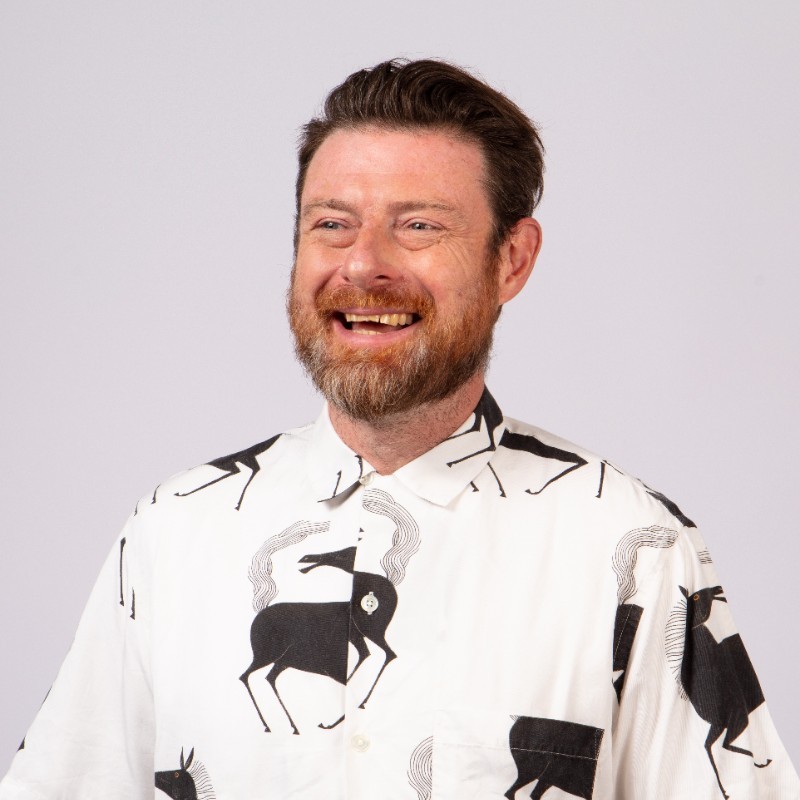
AI automated creative production will land from both agency and adtech, it's cheapness too appealing to resist, especially for an SME audience. For the record, I predict these offerings outside agency holdco's will win. Hybridisation of AI/human creativity will settle in to what we already know: humans make the story, AI does the work. Craft will endure in the unexpected idea. The question of creative effectiveness will go up the agenda, driven by scale and automation.
The answer to that will clearly be unified data. That data will be blended with media effectiveness increasingly to give a more wholistic view. In the automated unification of media and creative, data pertaining to creative at scale will be used in agentic end to end systems to optimise. Again for the record, I reckon holdco's WILL be the winers of that race. Sadly, people will still wear gilets even though they are naff.
Barney Worfolk-Smith, Co-founder, DAIVID
AI will free up marketers to focus on strategy, storytelling, and design

Moving into 2026, every creative asset must prove its impact, especially as budgets are scrutinised and demands for clear ROI grow. We will see AI step out of the shadows of backend operational efficiencies to take a frontline role, aligning creatives with campaign performance and directing how media is planned and bought. As a collaborative data ecosystem takes root across digital advertising, AI models will be able to access rich veins of consumer data, making every brand touchpoint personalised and relevant.
In practice, AI will let advertisers set up campaigns by defining a goal and product, with AI’s predictive power reverse-engineering the best placement, timing and creative mix. With AI fine-tuning all aspects of optimisation, marketers will be free to focus on strategy, storytelling, design, and brand differentiation. Given the high risk that automation will steer campaigns towards similar creative and strategic conclusions, this differentiation will be key.
Ivan Doruda, Chief Executive Officer, MGID
Ideas can be made more robust before a single shot is filmed
AI is rapidly reshaping the creative process, not by replacing craft but by expanding what’s possible, and pushing Creatives to expand their skillsets.
In image generation, we’re no longer limited to what a photographer can capture on set; AI allows us to build entire images from scratch, merging the roles of Art Director, Prop Stylist and Retoucher into a single role. This unlocks a new tier of visual experimentation that simply wasn’t feasible before.

Equally transformative is asset visualisation. The moment we have an idea, we can stress-test it through photo-real AI mock-ups, accelerating client alignment and ensuring our creative output keeps pace with fast, iterative ideation and enabling reactive content that needs to go live that day to be relevant.
And in video storytelling, AI-powered animatic storyboards give life to narratives earlier in the process. Instead of rough frames, we can explore mood, motion and pacing in depth, making video ideas more robust before a single shot is filmed.
Natasha Barnden, Design Director, eight&four
Accelerating the creative craft – not replacing it
AI will reshape creative optimisation in game advertising by 2026, but not in the way people expect.
The biggest shift won’t be the technology itself, but how creative teams work. Instead of chasing a single “perfect” asset, AI will push the industry towards fluid, modular creativity where ideas evolve in real time.

The real opportunity is speed and clarity: understanding why something works within hours, not weeks, and using those performance signals to shape fresher, more relevant ideas. But there’s a catch. If everyone follows the same optimisation patterns, the work risks looking identical.
The brands that stand out will use AI for precision while freeing creatives to focus on shaping the vision through storytelling, curating ideas, and delivering originality and memorable experiences that truly connect with audiences.
AI will accelerate the 'creative' craft, not replace it, and the industry’s leaders will be the ones who know the difference.
Andrew Woodhead, Global Head of Advertiser Success, iion
The next evolution of creative optimisation
It probably won’t surprise anyone to hear that AI has been used to optimise ad creatives and campaigns for years. It’s just that, up until now, it’s mostly been in the form of machine learning – a subset of AI.
But ongoing advancements in AI are set to spur the next evolution of creative optimisation.

In 2026, we’ll start to see these advancements take shape.
The most visible progress will come through dynamic creative optimisation, but the real power lies in using AI to understand why a creative or campaign worked – not just to optimise performance or select the ones that generate the most clicks.
Understanding why means analysing the broader context and environment, emerging trends, and nuanced human behaviour.
While we’re not quite there yet, 2026 will represent another step towards unlocking the intelligence in AI.
Radosław Kostecki, Business Unit Director, Spyrosoft AdTech
This new dawn should enable us to do things we couldn’t before
AI integration is only just beginning. Everyone is still getting to grips with it and understanding what it means for them. The question now is how to unlock its nascent creative potential with control and desired output.

This new dawn should enable us to do things we couldn’t before, not just execute legacy approaches faster or for the sake of it. Moving beyond the "slop" content we’ve seen so much of, or reaching people after they’ve been added to an ‘intent’ audience, brands should use AI to connect impactful ads with people at the exact moments they’re looking to act. In this new landscape, relevance will be the new standard of success. A generic message no longer works; messages need to be tailored to each individual’s needs and context.
If we nail this as an industry, it will be an incredibly exciting time, blurring the lines between advertising and entertainment.
Thomas Ives, Co-Founder, RAAS LAB
Agentic AIAICreativeGenerative AIOpenAIOptimisationPredictions








Follow ExchangeWire