
"The Challenge With Challenger Brands is 'When'": A Coffee With Joe Benn, MNC
←Back to Video Interviewsby on 28th Jan 2026 in Video Interviews
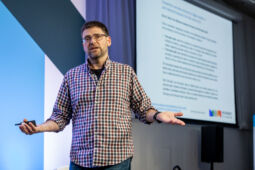
In this episode of A Coffee With… Joe Benn, director at MNC, joins ExchangeWire’s head of content John Still over an americano to chat challenger brands and MNC's Challenger 50 report.
Joe has been an operator and founder within challenger brands in the FMCG space, holding roles with Vita Coco, Graze, and Tenzing before launching his own brand. Tune in as he and John discuss the awareness-distribution scale and where challenger brands should focus their ad spend.
The Challenger 50 Report
A challenger brand is defined in the Challenger 50 report as a UK grocery brand with under £100 million in revenue, demonstrating at least 20% year-on-year growth for two consecutive years. The report used five key data points to create the MNC Challenger Brand Index, with AU Vodka emerging as the number one brand on the list.
"All 50 of those brands are achieving unreal performance. So even if you are 50th brand on the list, you're still the top 1% ... It's the—excuse the football analogies but—the "Champions League" of challenger brands, as it were."
Many existing lists are self-selected or based on a skewed view of the market, says Joe. The aim of the report was to provide an unbiased, factual list of top-performing challenger brands. MNC partnered with NielsenIQ, Tracksuit, and Beauhurst to create a defendable ranking based on a clear methodology and verifiable data.
The Awareness vs. Distribution Dynamic
Brands who are funded aggressively with VC backing may feel pressure to grow quickly; others may be more cautious with their smaller marketing budgets. As such, the challenge for challenger brands is 'when'—when to go, how big to go.
The report models all 50 brands on a graph, plotting awareness against distribution. Brands whose distribution outstrips their awareness (below the line) should be investing in above-the-line (ATL) media to grow their awareness piece. Conversely, brands with strong awareness should be pushing to get into the retailers and increase their distribution.
Optimal Media Spend for Challenger Brands
For FMCG brands, particularly in mainstream retail, out-of-home and TV make up the majority of media spend. How earlier stage challenger brands approach these channels is significant. For example, OOH can hit higher levels of frequency and quality inside of London than outside of it. In TV, the choice of format—linear, connected, targeted—depend on the type of brand and their target demographic.
More than choosing the right channels, the Challenger 50 report suggests that brands need to grow their awareness and distribution in line with each other, at the right rate and the right speed. Those on the trend line are the ones showing the most efficient growth. By aligning the two growth factors, challenger brands can best optimise their ad spend.



Popular Tradertalks


Latest Posts
-
 The Stack: The Ad Duopoly?
 -
 Digest: Programmatic DOOH Reaches $1.34bn Globally; Shein Stock Hits New Low Since IPO
 -
 The Ad Tech Toll Road
 -
 Digest: AI Strengthens Big Tech’s Hold on Ad Growth; China Pulls Ahead of US in Consumer AI Adoption
 -
 Ad Tech Personality of the Year and Ad Tech Rising Star 2026: Shortlists Revealed
Follow ExchangeWire