
The Trade Desk's Paula Bacariza Perez on Identity Graphs & The Graph of Graphs
←Back to Indexby on 19th Feb 2026 in TRADERTALK
In this Trader Talk TV episode, Paula Bacariza Perez, general manager of data & strategy in EMEA at The Trade Desk, joins ExchangeWire COO Lindsay Rowntree at the legendary whiteboard to discuss identity, identity graphs, and the graph of graphs.
Paula also explains the benefits of probabilistic data and why true omnichannel marketing requires a robust identity solution. By embracing an interoperable, multi-identifier strategy and trusting technology partners to manage the underlying complexity, advertisers can overcome the limitations of single-channel views and unlock the full potential of their campaigns.
Omnichannel, Multichannel, & Identity Graphs
A multichannel campaign uses various channels like TV, mobile, audio, and desktop; each use separate identifiers (CTV IDs, MAIDs, cookies). An omnichannel campaign uses a common identifier to follow the user across the channels, providing a unified view of the consumer journey.
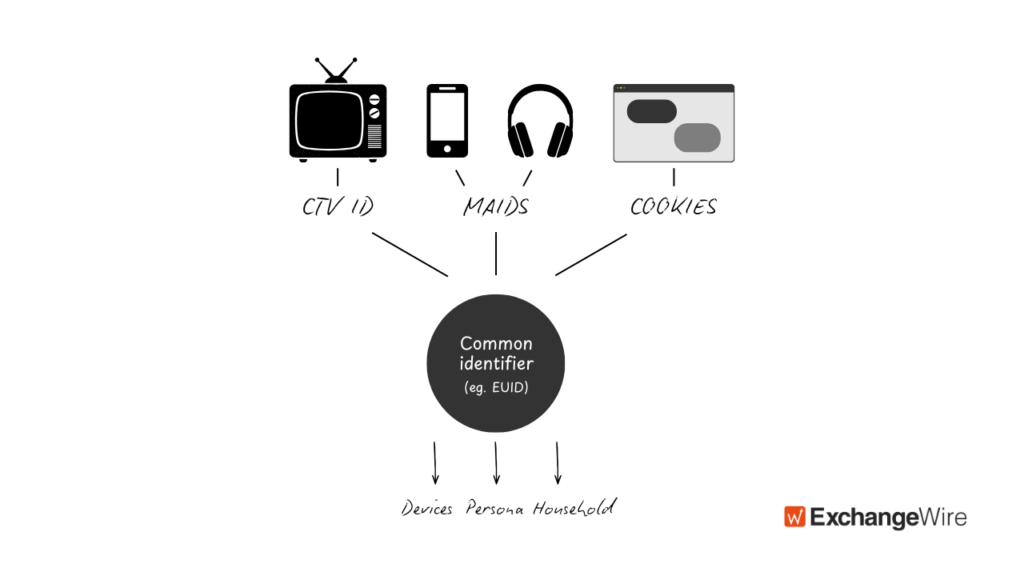
An identity graph operates on three main constructs: devices, linked to device IDs; personas, a group of devices belonging to a user; and households, linking devices and personas based on shared patterns like IP addresses.
Probabilistic Vs. Deterministic Data
Devices are a deterministic construct, while personas and households are probabilistic, based on assumptions and deterministic links. However, the tendency to ignore probabilistic data can often create challenges in building a true omnichannel strategy.
Deterministic data may be technically infallible, but it does not allow for frequency capping, leading to wasted spend on unnecessary impressions. While not 100% accurate, probabilistic data helps reduce such waste by providing a better view and enabling scalability.
The "Graph of Graphs"
A graph of graphs connects multiple individual graphs through identity resolution, linking devices, personas, and households to all the different identifiers (eg. ID5, RampID, emetriq). This enables interoperability, solving the shortcomings of single identifiers by leveraging the best of many.
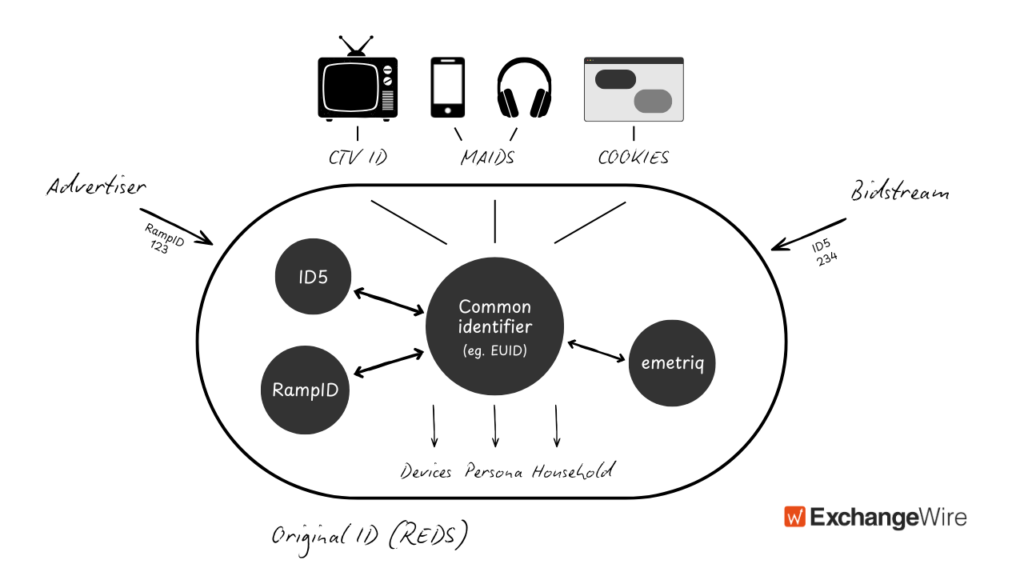
A key feature is translating identifiers back for reporting. For example, if an advertiser provides a RampID but the campaign converts on an impression with an ID5 identifier, the graph will report the conversion back using the original RampID. This ensures the advertiser can recognise personas and measure performance accurately within their own system.


Popular Tradertalks


Latest Posts
-
 Digest: Apple Blocks Trade Desk Ads on Safari; AppLovin & Unity Locked in Legal Dispute Over Data Collection
 -
 Is Podcasting Rated Highly Enough in the Media Mix?
 -
 Digest: UK Digital Adspend in H1 Tops Entire 2020; Shein Profit Plunges 67% as Costs Rise
 -
 "It Won't Be a Human in the Loop. It'll Be Another AI Agent.": PubMatic's Rajeev Goel on Cutting Complexity and Handing Power Back to Publishers and Advertisers
 -
 Digest: 58% of Ad Execs See Agentic Buying Scaling; Apple & Amazon Face Renewed UK Consumer Case
Follow ExchangeWire