
Amazon's Ad Tech Playbook, Brought to You by Google
by Shirley Marschall on 27th May 2026 in News
This week, Shirley takes a look at how Amazon's recent moves suggest a company going all in on advertising...
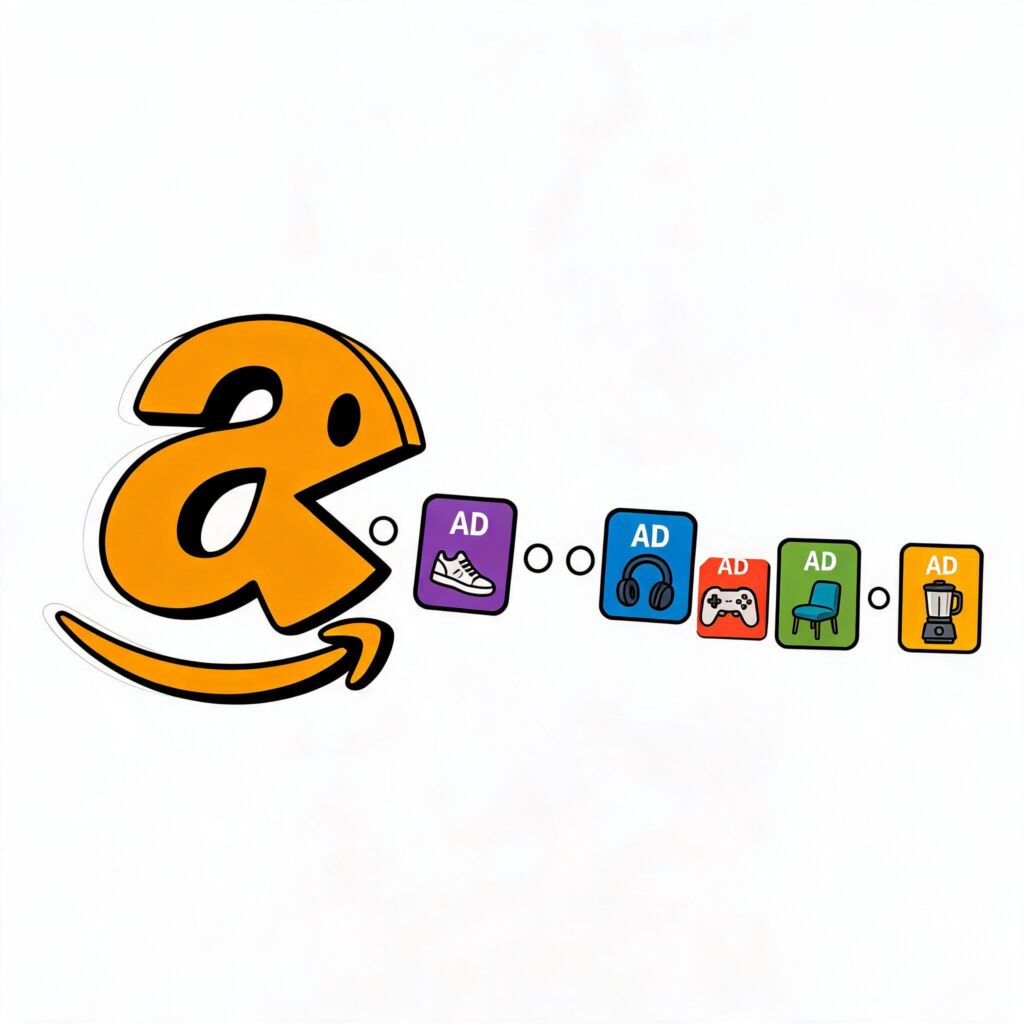
For anyone too young to have watched Google become the ad tech monolith/monopolist it is today, Amazon is now offering a remake. And for those even too young to remember how Amazon’s humble ad tech days began, here’s a quick recap: Amazon’s DSP was a mediocre platform used strategically for one thing: access to Amazon’s retail data. For years it was largely ignored by both Amazon and the wider advertising industry.
Well, not anymore. The script is familiar: start with a useful but unremarkable product, leverage a structural advantage nobody can replicate, expand through integrations, start dumping platform fees, become increasingly indispensable, then slowly absorb functions that once belonged to the wider ecosystem.
Of course, as with any remake, not everyone is excited to see the same “end-to-end stack, we’re eating the world” play(book) again. But got to give it to Amazon: after years of completely neglecting its ad tech business, it now seems to take it extremely seriously
What's changed? The DSP partnerships, the agentification push, the authenticated graph, the NewFronts and Upfront presented as ad tech showcases, the bells and whistles. Everything combined suggests a company going all-in on advertising. This time as a core business, not just an e-commerce sidekick.
Since 2025, Amazon started partnering with basically… everyone, drawing in an increasingly wide range of media owners and platforms, from Netflix and Disney to Roku, Spotify, SiriusXM, LinkedIn, Samsung TV and it’s not even mid-year. The message is (of course) interoperability: one DSP, every channel, every format. Though none of this supply is really unique to Amazon, despite the hype suggesting otherwise.
What Amazon's 2026 Upfront made clear is that this isn't just about accumulating partners. Amazon is busy absorbing functions that used to sit within the broader ecosystem. Creative optimisation, audience targeting, measurement: all increasingly handled inside Amazon's own stack. The personalised interactive video ads on Prime Video, adjusting in real time against actual shopping behaviour, are Amazon's own product. The authenticated graph covering 90% of US households is Amazon's own infrastructure.
Independent vendors feel the squeeze, but the headache isn't theirs alone. Amazon can do something even Google and Meta structurally can't: combine purchase data with streaming data with audio inventory with professional audience signals and activate all of it from one interface. So rest assured, the walled gardens are watching closely as well.
No remake in 2026 would be complete without an AI subplot. Automation only delivers on its promise when it has something to operate across. The more channels, formats, and partners that sit inside Amazon's DSP, the more an AI agent can eventually do, optimising across CTV, audio, live sport, B2B signals, from one single execution layer. The integrations make the automation meaningful. The automation makes the integrations sticky. For agencies managing an ever-increasing number of surfaces with an ever-decreasing appetite for complexity, that's the appeal. WPP and Omnicom, running Amazon’s own media business, certainly doesn’t hurt Amazon's ambitions…
But why is Amazon accelerating now? The answer may be that Amazon is bracing for a future that threatens its most profitable ad format. Because if agentic shopping takes hold, with Alexa buying on behalf of consumers, Amazon’s traditional sponsored products model gets complicated. An AI agent between the shopper and the shelf means the interception point moves, or disappears entirely. And so Amazon is simultaneously building the technology most likely to disrupt its own retail cash cow while racing to construct the upper-funnel and brand alternatives that could replace it. The DSP expansion, the CTV push, audio, live sports, the streaming partnerships: these are hedges and expansions alike.
What makes Amazon's position quite unusual in the agentic world is its approach to agent infrastructure. Most ad tech platforms pick a side: open agent standards (AAMP, AdCP) vs proprietary orchestration layers (MCP). Amazon, however, does both. It’s building its own closed agentic-walls, while participating in initiatives like IAB Tech Labs’ AAMP. Contradictory? Not really. It’s the same move as the DSP partnerships: participate visibly in the ecosystem while becoming structurally harder to operate without. The remake, updated for agentic infrastructure.
As Andrew Gilbert notes in Systems That Decide, another question, within the agentic and retail realms, is what happens to the current visible-but-not-biddable gap. Right now, advertisers can see what users are asking Alexa for in shopping contexts but can’t bid against that intent. If Amazon ever opens that gap, it creates something no other platform can match: an AI-native advertising layer sitting directly at the point of machine-mediated purchase, closed-loop with transaction data.
Which was true until roughly five minutes ago, when Google introduced Universal Cart at I/O. Entering the same architectural race, Google is extending agentic commerce across Search, YouTube, Gemini and Gmail, collapsing discovery, intent and checkout into a single loop. If Amazon is building agentic commerce from the transaction layer outward, Google is building it from intent inward.
Agentic or not, the course seems set. In 2026, more than 70 cents of every US digital ad dollar will flow to the tripoly, according to eMarketer. By 2028, each will individually generate more US advertising revenue than the entire traditional advertising market. Google crossed that line in 2022. Meta followed in 2025. Amazon is predicted to do the same by 2028.…
Amazon may be the last to cross that threshold, but none of the “big three” seems particularly interested in doing anything halfway, apparently working to the old German principle: Nicht kleckern, sondern klotzen.
Ad NetworkAIAmazonRetail Media





Follow ExchangeWire