
From Insight to Action: Rethinking Media Planning in the Age of AI Agents
by on 24th Apr 2026 in News

Caroline Sajas, SVP sales at Locala, examines the persistent gap between planning and activation in advertising, and why the industry's fixation on automation is missing the bigger opportunity.
Ask any planning team at an agency or brand about their biggest operational frustration, and the answer is almost always the same: not a shortage of insights, but an inability to act on them. Rich audience data, nuanced geo-behavioural signals, detailed market analyses, all of it tends to sit in a deck, acknowledged and then quietly set aside as campaign deadlines approach. According to a Forrester & Amplified study, 37% of advertising spend is considered ineffective, largely due to the fragmentation of signals and tools. The gap between analysis and activation is structural, and it is costing brands at scale.
So why has the industry been so slow to address it? Partly because fixing it requires rethinking not just the tools planners use, but the architecture of the planning process itself.
Automating a broken workflow does not fix it
Much of the conversation around agentic AI in advertising has centred on speed and efficiency: compressing timelines, automating repetitive tasks. These are legitimate gains. But they risk solving for the wrong thing.
The more interesting question is not how AI can help teams do the same things faster, but what it now makes genuinely possible that wasn't before. Granular, territory-level plans that account for physical mobility data alongside digital behaviours. Dynamic audience recommendations that adapt to local market signals. Media pressure calibrated by zone, channel, and competitive context, all within a unified workflow rather than reconstructed manually at each step.
That is a meaningfully different ambition than automation. And it requires a meaningfully different approach to building the tools that support it.
Transparency as a foundation
Handing part of the strategic process to an AI system raises a question the industry has not yet answered satisfactorily: how do teams build genuine confidence in AI-generated recommendations?
The answer is transparency, not as a compliance checkbox, but as a core design principle. When a system recommends a priority territory, a target audience, or a particular media allocation, planners need to understand why, with full traceability back to the underlying data. A recommendation that cannot be interrogated is not a useful recommendation, it is a liability.
Initiatives like the AdCP are actively promoting interoperable and transparent agentic workflows across adtech, demonstrating that standardised, auditable AI decision-making is not a future aspiration, but a practical reality being built right now.
Reconciling intelligence and execution
The practical challenge for most planning teams is not a lack of data, it is the friction between where insights are generated and where campaigns are built. These are typically different systems, maintained by different teams, on different timelines. Strategic thinking degrades with each handoff.
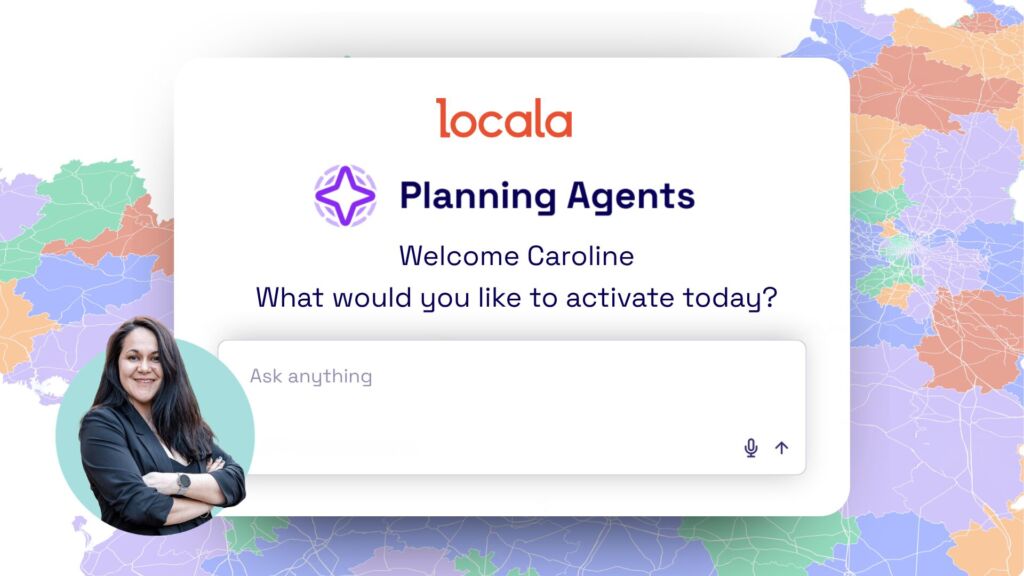
Closing that gap requires rethinking the relationship between analytical and activation layers – building systems where recommendations flow directly into actionable outputs without loss of fidelity, rather than being exported from one tool and manually re-entered into another. That is the problem that needs to be solved: translating omnichannel and geo-behavioural insights into deployable campaign parameters within a single workflow, making strategies that were previously too complex to execute with real precision genuinely achievable.
Stronger foundations, smarter strategies
As AI becomes more embedded in the planning process, competitive advantage will increasingly depend on one thing above all: the quality and verifiability of the data infrastructure behind it. Capability matters, but it is only as reliable as the signals it draws from. Vague, aggregated, or unverifiable inputs produce confident-looking recommendations with little substance behind them. Precise, auditable, real-world data produces something fundamentally different: strategic guidance that planners can actually trust and act on.
This is the foundation on which Locala has built its Planning Agents, not just on generic market signals, but on fifteen years of geo-behavioural expertise and a platform continuously enriched by real client campaign data. Every recommendation the system surfaces is grounded in verified, proprietary insights drawn from hundreds of real-world activations. Across the industry, this depth of experience is what makes the difference between an AI that generates plausible outputs and one that drives genuinely robust, reliable strategy.
The gap between insight and action has been a known problem in this industry for years. Closing it is not just a matter of ambition, it requires the right data foundations to make it real.





Follow ExchangeWire