
What Harry Styles Taught Me About the Future of Media…
by on 14th Jul 2026 in News
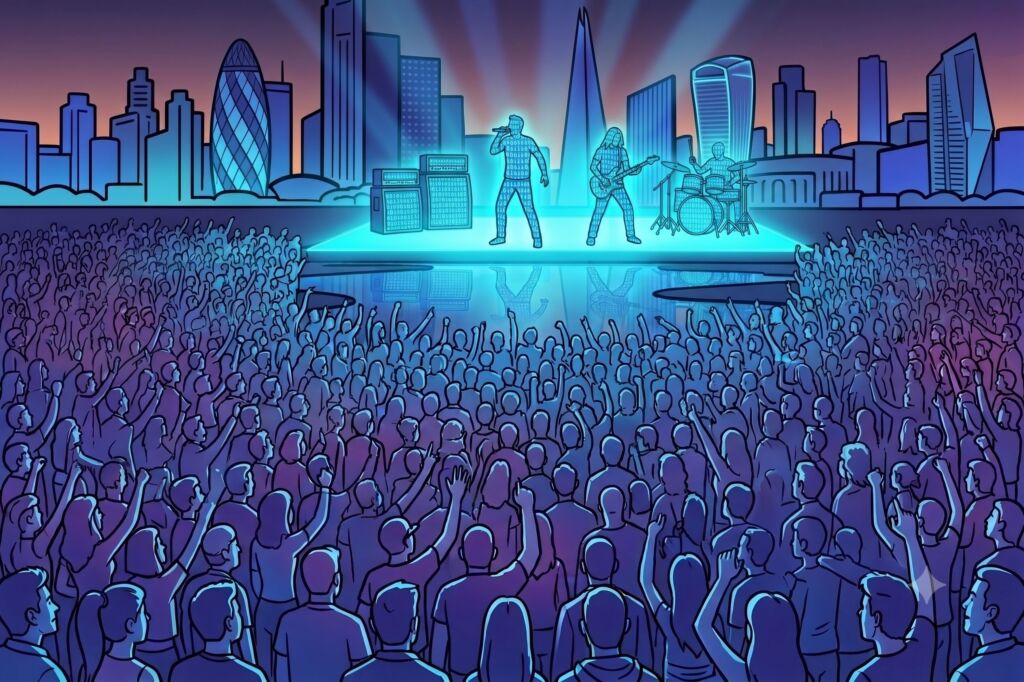
Our columnist Jessica Treasure of Bountiful Cow, was among the crowd at Harry Styles recent London shows, leading her to ask if 'real life' is the most premium media channel of all…
Last week I went to watch Harry Styles at Wembley Stadium. Two things struck me as I sang along to 'As It Was'. Firstly, it was incredible to see 90,000 people in one place, all focused on watching one man’s performance. Second was the positive energy and atmosphere. The warmth his fans showed one another was something to behold.
These huge 'real life' experiences are not new, albeit exaggerated over the summer months when festivals and sport come alive. But perhaps our focus on them as marketeers and planners has increased.
Where else do you get attention, shared connection, and a reason to put your phone down and show up. These moments are scarce, therefore is the most premium media channel of all, real life?
A changing society
We seem to be at a crossroads as a society. Debates around social media restrictions for teenagers are gaining momentum. Parents, schools, and policymakers are increasingly concerned about the impact of endless scrolling, algorithmically optimised feeds, and permanently connected lives.
Whether a ban happens or not, what the debate does highlight is that we are becoming increasingly conscious of the value of real-world, offline experiences.
Pinterest’s latest brand campaign 'the best thing you can do online is find a reason to go offline', shows that even businesses built on digital behaviour recognise that what people increasingly crave is not another feed, but something worth stepping away from the feed for. A 'sign of the times'? (one for the Harry fans).
Yet at the same time, AI is accelerating the digitisation of everyday life. More of our decisions are being shaped and influenced by machines. Yes, AI can give us a holiday itinerary, tell us what book to read next, instruct us on how to fix a washing machine or what brand of skincare to buy.
What it can't give us is that hairs-on-the-back-of-your-neck moment when 90,000 people sing the same song at exactly the same time. Magic.
Those magic moments live on through content, conversation, and memories. They become part of culture. In an age where brands are battling for relevance and stand out, this is perhaps why marketeers are drawn to them.
Mixed realities
The digital experience is not going away, if anything it will keep getting better. But the places where the strongest connections are formed are not feeds or prompts but stadiums, fan zones, parks, pubs. The places where we choose to be, not where we are targeted.
From a planner’s perspective, this creates an interesting challenge. If these environments are becoming more valuable, they are inevitably becoming more crowded. More and more brands will want the cultural kudos of the big match or the headline tour.
The brands that win in these spaces understand that people haven't turned up to see them. So how brands show up therefore needs to be seamless, generous, and memorable.
No easy feat!
Perhaps the biggest mistake we can make is treating these experiences like a traditional media buy. It’s not about impressions delivered, how many posts we can create or how visible the logo is (although of course important considerations).
Our planning ethos at Bountiful Cow is all about finding the neglected white space for our brands. We call it Relative Advantage.
So perhaps the real advantage here is simple - create something people would genuinely miss if it wasn't there. The fan zone. The exclusive merch. Early access to tickets.
Unlike a TVR or click through rate, that value is not seen overnight. Much like Harry, who has taken 16 years to get to a 12-night residency at Wembley, brands must show up consistently to earn their place.
As we continue to battle with the balance between technology and human experience, the role of today's most successful brands is shifting from broadcaster to enhancer. The best media opportunities are no longer just about reaching people. They're about bringing people together.
Maybe that's why 90,000 people standing in a stadium still feels so powerful. In a world creating more digital experiences than ever before, reality itself might just be the ultimate differentiator.
Ad SpendDigital MarketingDOOHMedia






Follow ExchangeWire