
New Research Reveals: Belonging in Britain 2026 - Modern Communities
by on 14th Jul 2026 in News
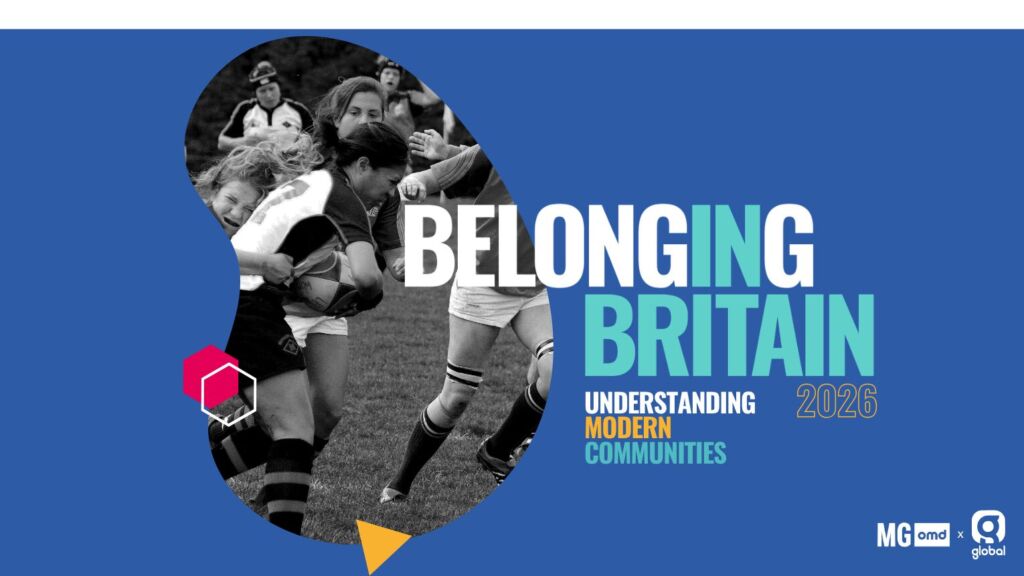
Award-winning media agency MG OMD and Global, the Media & Entertainment group, have published new research that explores how identity, community, and connection are evolving across the UK, and what that means for marketers and media agencies.
The research reveals that people inside communities are more trusting, more optimistic and more open to brands than those outside communities.
Here are some of the key findings:
- Belonging is growing: 35% of people now feel an emotional sense of belonging to their communities and 68% say their communities are important to their identity. Participation in passion and interest groups has risen from 82% to 91%.
- Identity is layered and anchored: Eight traits now shape the average person’s identity. Family, personality, passions, friends, and where people grew up top the list, while nationality is joint fifth. One in four say their job is central to who they are. Nearly one in five say the brands, the media, and events they choose form part of their identity too.
- Britain is a fan nation: Over a third of people belong to a sport supporter group, now the country’s most common form of community, and music fandoms have entered the top three. Gaming, fitness, and wellbeing groups complete a top ten built around things people do together, reflecting an appetite for participation, play, and self-care.
- Communities foster commercially valuable mindsets: 77% of people in communities feel they have choice and control over their lives, compared with 46% of those not in communities, and 63% feel confident about the future. 86% have been influenced by something they’ve seen or heard in their groups, shaping opinions, behaviours, and the brands they discover.
- Media can build belonging: 81% of people in communities feel a sense of community with at least one media channel, and 74% say media contributes to who they are. Whether that’s being a Reddit user, an LBC listener, or a devoted Love Island fan, people assemble personal media portfolios that wrap around their lifestyles and meet different emotional needs.
Sophia Durrani, head of strategic planning, MG OMD said: "For a decade we have become sharper than ever at reaching the right people, and that precision is not going anywhere. But knowing how to find someone is not the same as understanding who they are, the right way to speak to them and the best context to reach them in. Our research shows the communities we belong to are spaces that reflect the aspects of our identities that matter to us, and where trust still lives – despite the narratives that dominate the headlines. Brands that show up there as participants, rather than advertisers, will build relationships that precision on its own has never been able to buy."
Flora Williams, head of planning, MG OMD said: "What planners often miss is that identity moves. The anchors stay put - family, friends, the things people love, where they grew up - but which of those rises to the surface depends on what is happening in the culture around them. That is the planning opportunity. Read the cultural weather, plan around the communities people have chosen for themselves, and you give precision the one thing it has never had on its own, a real read on who people are."
Ailsa Mackenzie, commercial strategy director, Global said: "Media has always been a route to reach people, but this research shows it can also be a route into belonging. People are building their own media portfolios around the channels, voices, and formats that fit their lives, whether that is local media for proximity, podcasts for intimacy, social platforms for participation, or broadcast moments that bring people together at scale. The opportunity for brands is to reconsider thinking channel by channel and plan with the role of each channel in mind."
The full Belonging in Britain 2026 report sets out a practical framework for marketers looking to apply community understanding to campaign and media planning. It calls for a shift away from audience definitions and targeting built primarily around demographics, towards a richer view of people shaped by passions, place, relationships, cultural context, and the communities they choose for themselves.
Download the research >> here <<

Global
MarketingMedia SpendPeopleResearch










Follow ExchangeWire