
The Age of Agent Everything
by Shirley Marschall on 21st Oct 2026 in News
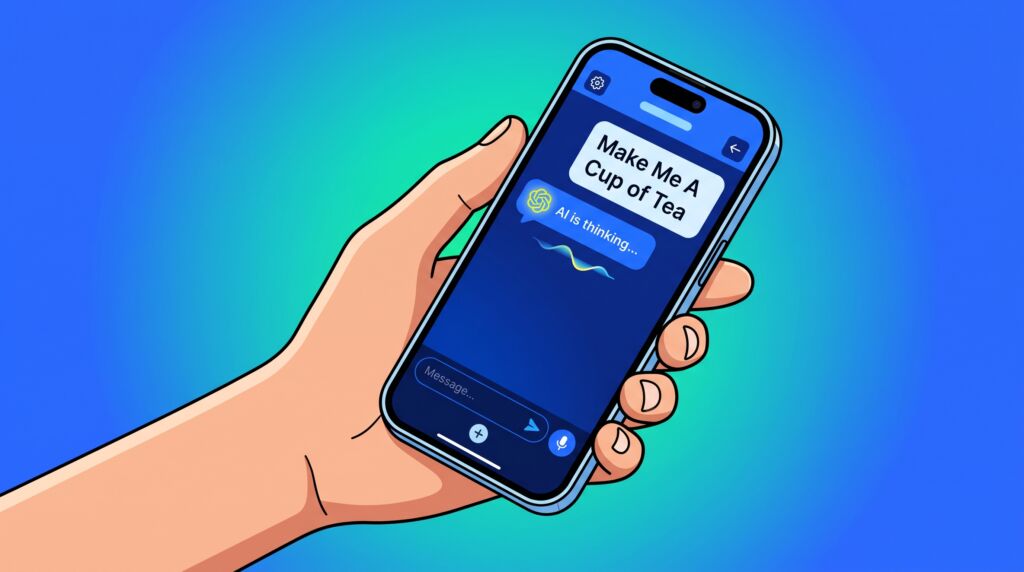
What do you really use AI for? In her latest op-ed, Shirley Marschall asks where the true value lies in everyday AI agents…
Everyone seems to have an AI agent running in the background, all day and all night, taking care of business, vibe-coding apps and software, and juggling a million tasks. Everyone? What about all the people who use AI but mostly as an alternative search tool, occasionally for shopping comparisons, to create an image or for similar basic tasks? All those AI 'normies' who can’t find a task they could, or need, or want to, hand over? Yes, even ad tech is full of normies. Perhaps because we know there’s always more to the deal than the monetary part.
I’ve thought hard about this, looked carefully at my own life and, despite my best efforts, I can’t find a single task for an agent.
Maybe I’m not that busy. Maybe a lot of my life happens IRL. Or maybe most of my days are simply made up of ordinary things that take a few minutes and then are over. There is no mountain, no backlog, no list waiting for a night shift to clear it. And there has never been a desire (or even an idea) that would involve coding. I don’t need a little artificial helper. Though, admittedly, it’s 3am as I write this.
Gremlins, before midnight…
The AI industry has noticed that not everyone is queuing up for an AI agent and responded with… cuteness. Muse, Dots and other personal AI agents come with names that sound slightly childish, while some of the gadgets look like Gremlins (before midnight). The idea, presumably, is to convert AI normies into proper AI users. Compared with the traditional model names, those strings of letters and numbers nobody can keep track of, Muse and its likes are certainly more memorable.
That’s a starting point… in theory. Because even professionals struggle to find the need. Sharon Goldman of Ground Level AI recently spent a few hours testing four personal agents, and her piece is worth reading. A tech writer with every professional incentive to find something worth delegating came up with… unsubscribing from mailing lists, where most requests were rejected or unsupported; buying an audio interface, which stalled at the payment page; drafting a note; and shopping for ballet tickets she had no plan to buy. When she asked herself whether any of it had taken things off her plate, the answer was a cautious "sort of".
The one thing that clearly helped was working through retirement account forms she had been avoiding. And the step that remained, the one she had hoped to dodge, was calling the bank.
That’s it, the telling detail. The work people actually want to hand off isn’t busy work, it’s the work they dread, and the dreaded work tends to involve money, identity, and accountability. And that’s also precisely the kind of work which often requires a person to show up in person. Just try to navigate bureaucracy online, let alone with an agent (who isn't a real flesh and blood lawyer or accountant) … and discover that not everything that looks like an online task can actually be completed online. Like my tax office experience, where I could only use the online portal after I had gone in person to activate access. Or the water company: I could change my address by email, but only after collecting the offline form at their office. An AI agent could have helped me with the online part. Make the offline prerequisite disappear? Less so.
But practical limitations aren't the only issue. For many AI normies, even Goldman’s experiment is unimaginable for a very simple reason: trust (or more precisely the lack of it). Zuckerberg, Musk, and Altman are now the new movie villains, reflecting a broader shift in how the public sees the people running the tech industry. Making "no way I’m linking something to my bank or email account to work for me when I’m not around" a very natural reaction. No amount of cuteness can make that concern disappear. But then again, while Zuckerberg has an image problem, Meta’s business is still booming. So maybe Muse and its digital cousins will take off, too.
Maybe. Maybe not, because the reluctance is not just a mood. Trevor Pan lays out the privacy case in "Meta’s Muse Is the Pokémon Go for Your Identity Data." By his reading of Meta’s own documentation, Muse’s browsing, booking, and shopping can indirectly influence the ads users see, interactions train its models by default unless switched off, and staff access is limited by internal policy rather than prevented by design. The question is whether the benefit is worth that trade-off, particularly for people who haven't found a task they want to delegate in the first place.
Muse costs nothing, so the price must be somewhere else. OpenAI’s Dots, by contrast, means moving from a $20 monthly plan to a $100 one, which is steep for AI normies.
Not jumping on the personal-agent race is too often framed as a failure of ambition, as if anyone who isn’t delegating tasks around the clock is falling behind. But not everyone has a mountain of tasks to clear, and not every ordinary part of life needs to become a problem for AI to solve. Some of us are quite happy being AI normies and getting on with things ourselves.








Follow ExchangeWire