
"It Won't Be a Human in the Loop. It'll Be Another AI Agent.": PubMatic's Rajeev Goel on Cutting Complexity and Handing Power Back to Publishers and Advertisers
by on 29th Sep 2026 in News
ExchangeWire’s John Still, sat down with PubMatic CEO Rajeev Goel to talk about ad tech complexity, and how agentic buying could change who holds power in programmatic…
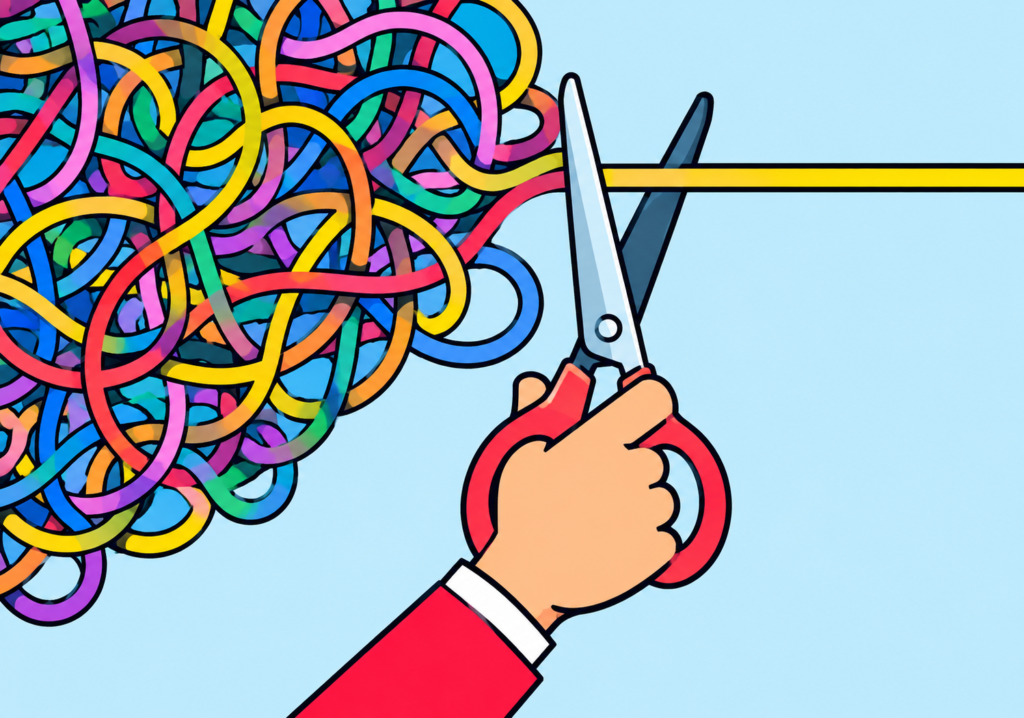
For twenty years, ad tech has kept adding layers between the people who make media and the people who pay for it. According to PubMatic's CEO, Rajeev Goel, that is starting to reverse.
Goel spoke to ExchangeWire after headlining ATS London the day before. He explains why he thinks the industry is finally stripping out complexity, what PubMatic is building to make that happen, and why he thinks agentic buying will leave publishers and advertisers stronger than the platforms that serve them.
Unwinding two decades of layers
Goel is quick to give the SSP/DSP model its due: "Programmatic, the SSP–DSP paradigm, brought the industry to where it is compared to 15 years ago," he says. But he believes the next era of digital advertising will need something different.
He sees several trends coming together. The first is demand for performance. "What we hear from advertisers and agencies is that the need is to deliver measurable performance," he says. "And a big chunk of the market, the mid-market, is sitting outside of the open internet today. Those mid-market advertisers are particularly focused on performance solutions."
The second is privacy regulation, which is changing how the ecosystem is built. "Data is drying up on the buy side, although it's still available on the sell side, where you have consent between the publisher and the consumer," Goel explains.
The third is scale. "When we think about the volume of impressions and the volume of data we're processing, the cost, complexity, and time required to physically transfer all of that to a DSP is starting to break down," he says.
All of this is happening while AI capability, and people's knowledge of how to use it, is growing fast. Together, Goel argues, these shifts create an opening to "get back to the roots: bringing the publisher and the advertiser closer together and letting them transact directly, which should lead to increased return on ad spend and increased publisher revenue".
"No longer an SSP company"
Goel says PubMatic's own response rests on three pillars. He also makes clear that the company now sees itself as more than an SSP.
"As of several years ago, we're no longer an SSP company, but a company where the SSP is one of the product offerings," he says.
The first pillar is Activate, which has been in-market for about four years and lets buyers transact directly within the SSP. Goel stresses that this is not the same as running an SSP next to a DSP.
"That's very different from saying, 'We have an SSP and a DSP.' We do not have a DSP," he says. "What we have is a new type of solution where the buyer can buy directly in the SSP."
He lists the benefits: privacy, access to all inventory without traffic shaping, and better audience match rates. "You often have a fall-off in the audience rate as you move from the SSP to the DSP," he notes. On top of that comes lower operational complexity and lower overall fees. According to Goel, hundreds of advertisers across every major holding company, plus dozens of independent agencies, now use Activate worldwide.
The second pillar is Agentic OS, a suite of more than 20 AI agents that buyers and publishers can both use. They cover discovery, planning, activation, measurement, governance, and fee transparency: "Year to date through Q2, we have 4,000 publisher-created deals using AI," Goel says. "It's a very simple and easy way for publishers to create deals."
The third is Decision Fabric. It combines the data in PubMatic's platform, including roughly 300 data partners, with containers where agencies and DSPs can place their buying algorithms directly inside PubMatic's infrastructure. They can then use the platform's inventory, data, and compute on the spot rather than shipping everything out.
Where can the open web win?
So how does the open web compete with the walled gardens? Goel thinks the answer lies where performance meets premium inventory.
"Premium inventory is something the walled gardens don't really have at scale," he says. "They obviously have a lot of user-generated content." The open internet, by contrast, has long had high-quality streaming content, mobile apps, news, finance, and entertainment.
"What we have not had until very recently is a robust set of performance solutions relative to the walled gardens," he adds.
He points to the third-party cookie as the reason: "It was kind of this good-enough solution. Not good enough to run performance, but good enough to stumble along," he says. As cookies have declined, the fastest-growing parts of the open internet (CTV, mobile app, and commerce media) are the ones where users are logged in at high rates and have given clear consent.
"That's creating much better ground for performance advertising," Goel says. "But we have to actually build and scale those solutions."
Judging AI against reality, not perfection
When it comes to AI, Goel is excited: "Obviously AI is an amazing technology and I think people are dazzled on a weekly basis by all the new capabilities." But do those capabilities need some guardrails? Goel believes in oversight, but thinks the usual framing is wrong:
"It's almost the wrong framing to think about how AI agents will work relative to perfection, because perfection is not the status quo," he says. "The status quo is human traders and operations people, and they make mistakes all the time. We get calls from agencies or advertisers saying, 'I meant to put in a million and I put in two million, or an extra zero.'"
"What we're seeing so far is that AI is significantly better than the current rate of human error."
PubMatic's approach to oversight rests on two ideas: governance and reasoning. The governance agent checks the work of the execution agent against the advertiser's or agency's trading history.
"If we ingest last year's trading data, we can see what types of media were bought for a particular advertiser, what the typical CPMs and campaign sizes were," Goel explains. "Then if you try to create a campaign that's anomalous, say a USD$20 (£15.07) CPM instead of $2 (£1.50), the agent will throw up a prompt: 'This looks very different from what we've done in the past. Can you confirm?'"
The governance agent can also enforce approval rules. For example, campaigns above a certain budget might need VP-level sign-off inside the agency, or the client's approval.
Reasoning is the other half. The agent logs the decisions it made, the options it considered, and why it rejected them. "If you're looking at a media plan: why did the agent pick these 50 sites or apps, and what other options did it consider and discard?" Goel says. "That gives people transparency into how the agent is thinking."
An agent in the loop
Goel does not expect humans to be the ones reading those logs, however.
"I actually think it won't be a human in the loop. It'll be another AI agent in the loop," he says. "Is a human going to sit there and consume the reasoning logs of your trading agent? I'm highly sceptical."
He thinks it is more likely that an agency- or advertiser-owned agent will review the logs, flag exceptions, and send feedback straight to the trading agent so it can improve itself.
"If I throw an exception to a human, now what's the human going to do? That seems pretty unintegrated into the workflow," he says. "Versus an agent just telling the trading agent: 'Next time, prioritise the quality of the content over the CPM. I'm okay to pay a little more if the quality score is high.'"
The broader aim, Goel says, is to take the rote manual work out of the industry "and allow people to focus on creating much more value through client engagement and delivering compelling advertising experiences".
Power back to the principals
Will agent-to-agent buying change who holds power between buy side and sell side? Goel says yes, but not in the direction you might expect.
"I think it'll shift the balance of power to the principals in the transaction, meaning the publisher and the advertiser, over the technology platform providers, including ourselves," he says.
He says this idea has shaped how he has built PubMatic. "The durable entities in the transaction are the publisher and the advertiser. Consumers are always going to want media in whatever form, and streaming is the latest, but there'll be other things in the future. And there will always be brands that need to get their message in front of consumers,".
"If we looked at the industry 100 or 200 years from now, those two things will still be there. The technology providers and capabilities will obviously change."
For Goel, that is the real prize in the push for simplicity. "The big opportunity is to bring prominence back to the media owner and the advertiser," he says, "and deliver outcomes that are in better service of their businesses."

PubMatic
AdvertiserAgentic AIAIProgrammaticPublisher






Follow ExchangeWire