
Google’s AI Search, the Crocodile Effect and Publishers’ “Exposure”
by Shirley Marschall on 10th Jun 2026 in News
This week Shirley Marschall casts her eye over Google's AI search moves and new CMA rules, asking whether visibility ever converts to value…
Google’s latest move to AI-ify search, not just by bolting an AI Overview but by turning search itself into one big chat, didn’t land as smoothly as Google would have probably liked.
People, usually too tired to switch browsers, got even more tired of AI getting stuffed into everything without the ability to opt out and started running en masse to alternative search engines. DuckDuckGo’s US installs alone climbed for several days after the announcement, peaking at a 30% week-over-week surge.
Publishers started panicking and running the numbers on what comes next. AI Overviews, which already caused a sharp drop in clicks, suddenly look like the aperitif. And the zero-click web, which already started to feel more like an inevitability than a theory, now feels imminent.
And then regulators, who are not exactly known for moving quickly on anything, moved quickly. The UK’s Competition and Markets Authority ruled that publishers must be able to control whether their material appears in AI-generated features, receive clearer information about how their content is used, and get access to more detailed performance metrics. An opt-out for publishers… that’s a first.
That all three camps reacted this fast says something. Sure, what they’re reacting to isn’t quite the same thing. For users, this is about being force-fed yet another AI product. For publishers, it’s about traffic that now isn’t arriving. For regulators, it’s about market structure and coerced consent: before this ruling, opting out of AI training meant opting out of search entirely, which meant, functionally, there was no opt-out.
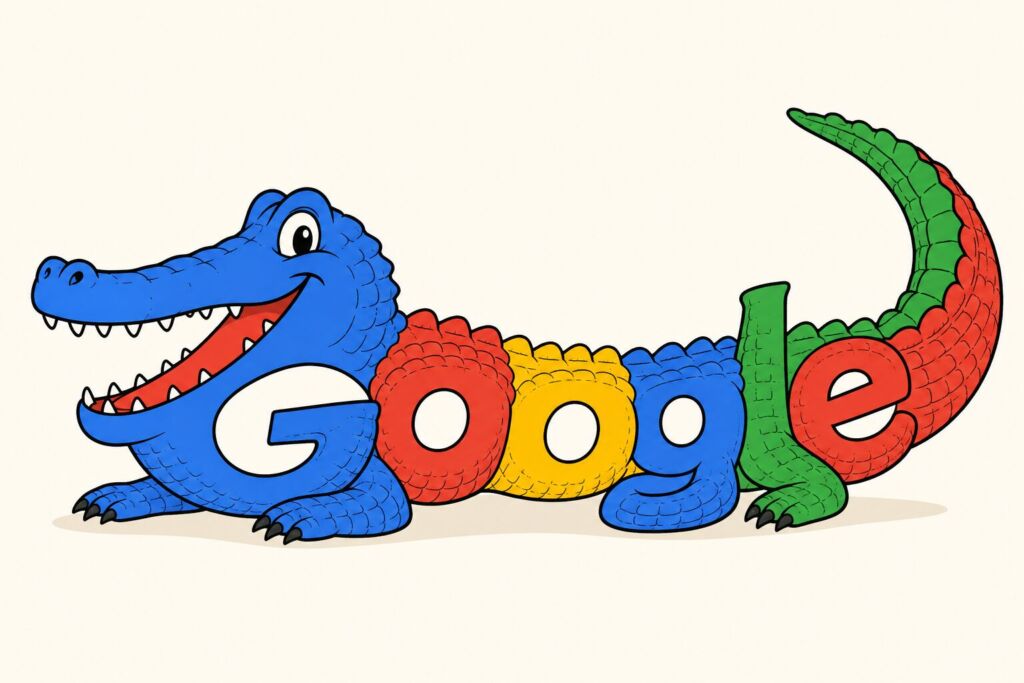
Opting out of search entirely would mean… well, it depends on the moment in time. Pre-AI Overviews, it would have meant no more organic search traffic. Post-AI Overviews? Anastasia Micich, Research Analyst at Check My Ads, has the answer and it’s called the Crocodile Effect. Impressions are going up, more people see headlines and more searchers are surfacing the outlet's content. However, simultaneously, the clicks on these links are going down. For journalism, this is a serious threat as it depends on those revenue driving clicks.
More visibility? More impressions? Without traffic? That sounds a lot like a very particular type of payment that has circulated through the creative industries for as long as there have been creative industries. The one payment that doesn’t appear on invoices, doesn’t pay salaries and doesn’t fund a newsroom.
This vague promise that visibility will eventually convert into something more valuable. Offered and accepted often enough, that entire industries learned to treat it as a legitimate form of compensation.
Publishers’ content was never supposed to drive solely ‘exposure’, though. The entire operating logic of the open web was traffic. Search engines indexed work and sent readers. Social platforms distributed content and sent audiences. At first, the exchange worked and value moved in both directions. But over time, the terms changed. Of course they did… and with every change, the platform retained a little more of the value while returning a little less of it.
Publishers went along with it. Not always with good options, not always with full information about where the terms were headed. But the deal was still ok-ish. You put your content on the open web, you got indexed, you got traffic. You could have opted out. Some did, most didn’t.
And then came AI Overviews. Publishers didn’t opt in. They didn't need to. The content had already been indexed, and the training had already happened. A new product was built using material that had entered the system under entirely different assumptions.
Farewell to the click?
The click, which had long served as the mechanism that made the exchange legible, disappeared. But who needs clicks if you can have exposure? Being cited is now being framed as value. Being included in AI pre-packed answers is framed as visibility. Exposure is presented, once again, as compensation, finally reaching its logical conclusion. And with Google now swapping Google search for AI search, betting that the future of search is conversational AI rather than ten blue links, publishers are now being asked to basically accept nothing (monetisable) at all.
Sounds like a bad deal? It isn’t even a deal anymore. A.G. Sulzberger of the New York Times made the point another way: building AI requires talent, compute, energy and data. The engineers are paid extraordinary sums. The chips aren’t stolen from Nvidia’s loading dock. The power companies are not being asked to run data centres for free in exchange for the reputational upside of powering something important. Yet ‘data’ - books, journalism and decades of cultural output - is taken without asking.
CMA: a timely intervention?
The CMA ruling attempts to separate indexing from training, and search from AI generation. In theory, publishers can now opt out of AI features without losing their place in search results. In practice, most won’t. Google still holds around 90% of the search market. Opting out of Google’s AI remains, functionally, close to opting out of being found.
Unless the market moves.
User backlash, against AI search specifically and AI in general, may matter here in a way that goes beyond sentiment. Every bit of search share Google loses changes the maths for publishers. A Google with 75% market share is a different negotiating partner than one with 90%. And the value of opting out becomes more meaningful depending on how much Google needs the content, which depends on how much users accept the new model.
Which makes the user revolt the wildcard. This time the users' dissatisfaction and the publisher crisis point at the same thing: a product that extracts value from the open web while steadily making the open web less worth extracting from. The open web has absorbed a lot over time and kept going. Now, it depends on users, publishers and regulators keeping the pace they set these past weeks.
Read all of Shirley's columns here, and find her on LinkedIn




Follow ExchangeWire