
Globally Connected, Locally Designed: Havas Media Network MENA’s Naveen Chacko Mathews on Loosening the Grip
by on 29th Oct 2026 in News

Charlotte McEleny chats to Naveen Chacko Mathews of Havas MENA about client relationships, AI, and planning across the region…
Every marketer accountable for a budget wants to know where each dirham goes. Brands in MENA have the opportunity to decide how much control to hand to agencies and local teams in return for moving faster and planning closer to the consumer.
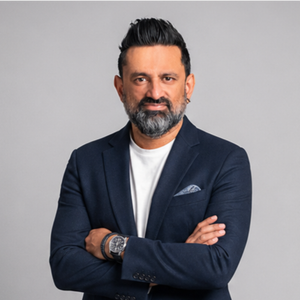
Naveen Chacko Mathews, managing director of Havas Media Network MENA, argues for a looser grip within a firm framework: clear objectives, shared KPIs, and strong governance, with teams free to act on what the data and the consumer tell them. He spoke to ExchangeWire about what that looks like across client relationships, the major platforms, AI, and planning for Saudi Arabia and the UAE.
You moved from client-side at Emirates into agency leadership. What did you hold on to as a client that you now see differently as an agency MD?
One of the biggest shifts in perspective is understanding the tension between the need for control and the need for agility. When you are client-side, you quite rightly want transparency, accountability, and confidence that every dirham is working as hard as possible. You want clear plans, predictable delivery, and evidence that your agency is making the right decisions.
As an agency MD, I still believe in all of that. What I have come to appreciate more is that the best outcomes don't always come from having tight control over every decision; they come from a strong strategic framework and empowering people to make the right decisions within it.
Media is moving too quickly for every optimisation, creative iteration or audience opportunity to wait for multiple layers of approval. Equally, agility without accountability is just activity. The balance is to establish clear business objectives, shared KPIs and strong governance, then give teams the freedom to respond to what the data and the consumer are telling them.
As a client, you buy certainty and the belief that every dollar delivers ROI. As an agency leader, you realise that certainty in process and delivery is not the same as certainty in outcomes.
Does that change what clients should expect media to deliver?
The biggest pushback here is that advertising and marketing cannot be the de facto, or only, tool to solve all business problems and drive increased revenue and sales. Yes, they can help and influence, but they're one of several levers that need to work in tandem.
To do this, I believe the relationship works best when the client and agency stop behaving like buyer and supplier and start operating as one team with a shared business outcome. That's when the agency moves beyond delivering a plan to genuinely influencing the business.
Much of the region's digital spend runs through Meta, Google, TikTok and Snap. What does independence from the walled gardens look like for a client in MENA?
True independence does not mean walking away from the walled gardens. It means not letting them define your entire customer understanding or measurement framework. Clients need stronger first-party data strategies, robust CRM and customer relationship capabilities, a clear view of incremental business outcomes, and measurement approaches that can assess each channel's contribution beyond the metrics each platform reports.
For agencies, our responsibility is to help clients connect these environments, challenge assumptions and build an evidence-based view of performance. We should be able to tell a client when a platform is delivering incremental value, when it is simply capturing demand that already existed, and when the next dirham might work harder elsewhere.
When a Gulf client asks you about AI, where do the most productive conversations start?
Clients face several interconnected challenges: fragmented data, legacy processes, unclear governance, questions about privacy and intellectual property, and uncertainty about how to measure the return on their AI investments. There is also a human challenge. Technology can accelerate execution, but organisations still need people who know which questions to ask, how to interpret the answers, and where human judgement matters most.
We have seen this in practice several times, developing bespoke solutions to address specific business needs. These have ranged from creating synthetic audiences to enable bespoke testing and generate deeper insights, to automating email marketing workflows and using AI agents to capture competitive intelligence. Each solution starts with a specific business challenge and is designed around the outcome the client needs.
Saudi Arabia and the UAE are often planned together. What do brands gain from giving local teams more say, and how does a global network like Havas make that work?
For a global network like Havas, the opportunity is to combine global strategic capabilities, data and tools with genuinely local intelligence, and decision-making. Global consistency matters, particularly for international brands, but it should establish the direction rather than dictate every executional decision.
My view is that the strongest regional model is globally connected but locally designed. We should be able to share intelligence, technology, and best practice across markets while giving local teams the autonomy to respond to their consumers and business realities.
AgenciesAIMENAPeoplePersonalisation









Follow ExchangeWire