
Why a Three Hour Epic Still Captures Our Attention
by on 22nd Sep 2026 in News
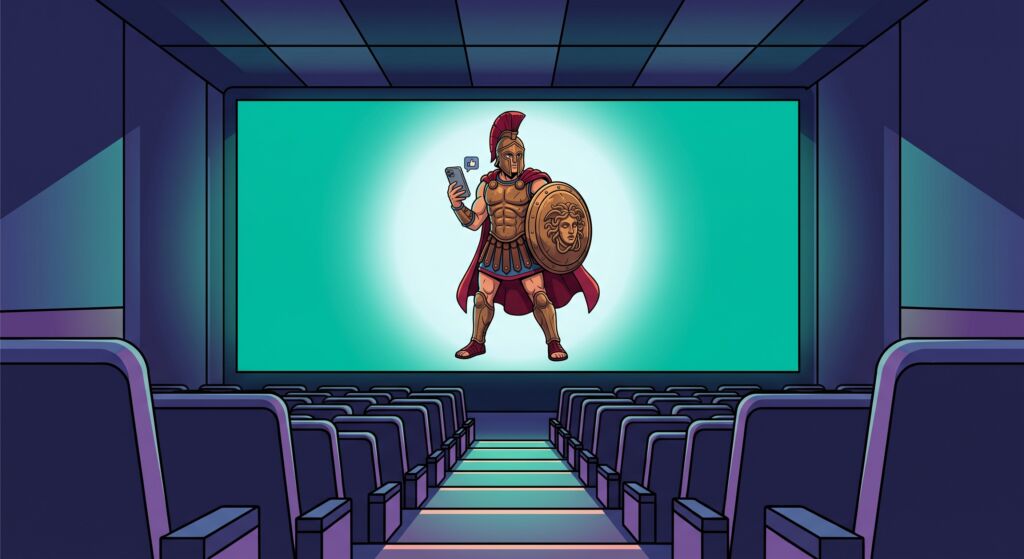
Columnist Jess Treasure of Bountiful Cow asks if we’ve misunderstood how attention habits have really shifted?
As we near the end of the Summer and everyone returns to some sense of normality, I was surprised that the office was still talking about The Odyssey (the latest Christopher Nolan three-hour epic, for those that have been living under a rock for the last few months). What was even more surprising was discovering that some people had been watching the whole thing on TikTok...
Getting a ticket to see it in IMAX still isn't easy. Demand remains huge, the box office has now grossed around USD$1.45bn (£1.076bn) worldwide and reportedly become Nolan's highest-grossing film to date. Yet there have also been an estimated 35-50 million pieces of content created about it online, while a leaked version uploaded to X reportedly attracted 2.1 million views in just two and a half hours before the account was suspended.
At one end, people are consuming the film through fragments, edits, reviews, and reaction videos. At the other, they're queuing for months to see the most immersive version possible. One form of consumption clearly isn't cannibalising the other, despite the industry's obsession with making everything shorter.
Have we misunderstood how attention habits have really shifted?
We often talk about shortening attention spans as though people have stopped wanting to engage with things deeply. I'm not sure that's true.
Perhaps we're simply mistaking discovery behaviour for consumption behaviour.
Today we discover culture through hundreds of touchpoints. Reviews. Memes. Creator content. Fan theories. Reaction videos. The list goes on.
So yes media and therefore content is fragmented, but the ultimate experience hasn’t.
Whether it's a three-hour film, a festival, a football match or the latest reality TV showdown, people are still willing to commit serious time to things that capture their imagination. The different touchpoint fragments don’t replace culture, the more there are the bigger a cultural property becomes. It’s creating the fame, and the biggest driver of attention is fame.
The strongest brands increasingly behave like cultural properties in their own right.
For planners, this feels particularly relevant.
If most brands are responding to the attention "crisis" by creating shorter content, they are all fighting in exactly the same place.
The Relative Advantage might actually be the opposite. While everyone else is optimising for capturing attention, perhaps the real opportunity lies in rewarding it. Creating something worthy of commitment. Discussion. Sharing. Recommendation. Something people actively choose to spend time with.
So perhaps rather than asking how we fit all of our messages into six seconds, we should be asking how we get people to spend six hours with us (although six hours may be pushing it!).
The strongest brands increasingly behave like cultural properties in their own right. Things people seek out, talk about, recommend, and feel part of and not because they are forced into their feeds.
Could this result in a future that isn't shorter, but more polarised? A future where the middle almost disappears. AI will undoubtedly accelerate this. It will make the shorter end of the spectrum faster, more transactional and highly efficient.
We are able to get a perfect plot summary, reaction video or review at a touch of a button. But we still want to sit in a dark room for three hours. Why? Because it was never just about information, it was about the experience.
The very same technology ecosystem that is making content more fragmented is simultaneously making immersive experiences feel more valuable.
As machines increasingly optimise the functional aspects of our lives, the advantage for brands may not come from being quicker, shorter or more efficient.
It may come from creating something worth slowing down for.
AgenciesAgencyAttentionAudienceMobileSocial Media






Follow ExchangeWire