
Has Precision in Measurement Become a Hindrance?
by on 28th May 2026 in News
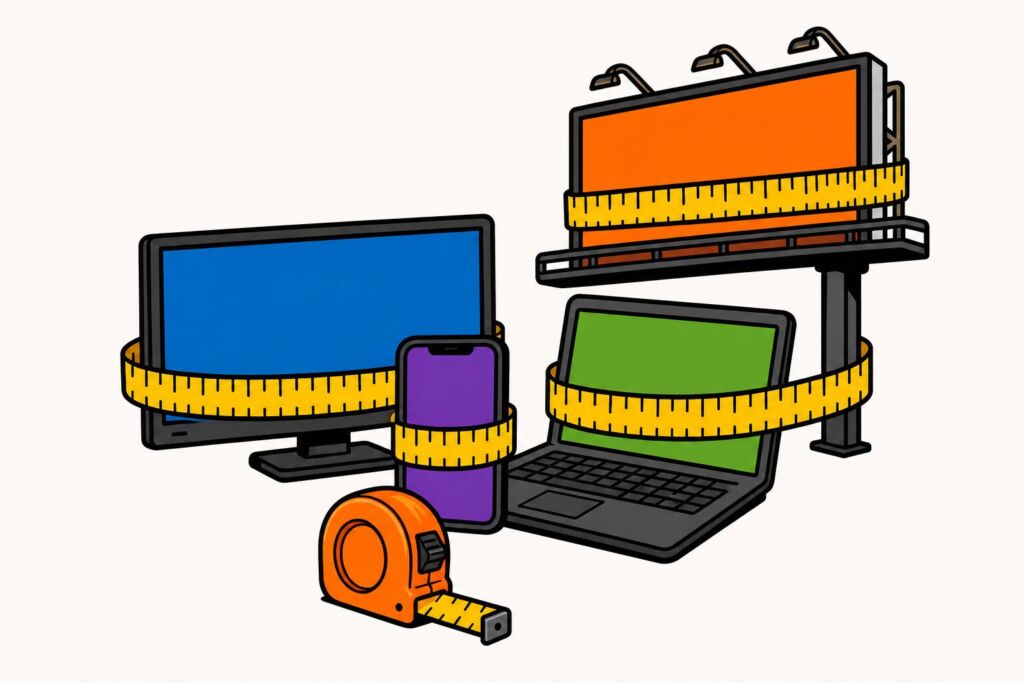
Charlotte McEleny talks to James Smyllie, Ungu and Kacie Flynn, Carat Singapore about whether the ad industry has optimised itself into a corner…
The programmatic industry built the infrastructure that made digital accountability the industry standard. Real-time reporting, attribution dashboards, ROI proxies that land before the campaign has even finished. It was, by any measure, a genuine leap forward. But somewhere in the process, it also built a trap.
The measurement architecture that digital built didn’t just make online channels easier to justify. It made offline channels harder to defend, and over time, harder to plan. The craft of offline planning is rapidly ageing out, and the incentive structure driving that decline runs straight through the programmatic world.
James Smyllie, founder of Ungu and former president of Initiative APAC, and Kacie Flynn, general manager of Carat Singapore, both see the same problem: the industry has optimised itself into a corner, and the people inside it are behaving entirely rationally. Where they part ways is on the cause. For Smyllie, the root of it is measurement asymmetry - a feedback gap that makes offline channels harder to defend, regardless of their actual value. For Flynn, the bigger driver is simpler: consumers are spending less time with traditional channels, and planners are following them. The fix looks very different depending on which diagnosis you accept.
An agency shaped by spend
The change inside agencies over the past decade is hard to overstate. Traditional channel teams (those handling TV, cinema, OOH, radio, and print) have been progressively consolidated, often into a single small unit covering everything offline. Meanwhile, programmatic, performance, and biddable teams have grown into the dominant cohort.
Smyllie describes the result bluntly: “Most agencies now have a thin layer of senior management, a mid-tier of folks managing clients and the internal agency teams, a large digital activation cohort, and a small offline tactical planner/buyer team (if at all).”
That offline team is where the problem becomes most visible. “It’s small, and because very few new people have been trained into the skillset, the people doing it are often in their late 40s and 50s,” he explains. “It’s not unusual to find that the offline buyers are older than the CEO or MD running the agency. Yet they sit in the org chart at a similar level of seniority to someone fresh out of uni, optimising a search campaign.”
Flynn reads the same situation as an opportunity rather than a failure. “As media ecosystems become more interconnected, we are seeing increasing value in talent that can navigate both established and emerging environments,” she says. The gap, in her view, is less about what has been lost and more about what needs to be invested in going forward.
The walled garden problem is a talent problem
Over-reliance on walled gardens is an evergreen topic in digital media, usually framed as a platform power story. Smyllie argues it is also, significantly, a talent story.
“The walled garden dominance isn’t just about platform power or measurement convenience,” he says. “It’s also about the media planners making channel-level decisions now, who have come up the ladder starting out as digital activation specialists, with Google, Meta and TikTok as their base. This is very different to just 5 years ago where a planner making these decisions would have started when offline was a much more significant part of any media mix.”
The practical consequence is speed. “The alternative is briefing in the offline tactical planner/buyer team, which takes time,” Smyllie adds. “Not feasible when clients expect media plans turned around in hours, not days now.” Channel mix recommendations built entirely from platforms no longer require justification. They have become, as he puts it, “the ‘you don’t get fired for choosing…’ channels.”
Flynn points to audience rigour as the lever that breaks the default. “Audience rigour and strong planning will help break out of a mould that defaults to walled gardens,” she says. “Those with broader exposure are often better equipped to challenge defaults and build more balanced ecosystems.” The problem, as Smyllie’s analysis makes clear, is that broader exposure is precisely what fewer planners now have.
A craft ageing out
The knowledge loss is not theoretical. “The senior buyers who genuinely understand how to plan a TV campaign, put together a coherent OOH recommendation, or build an annual omnichannel media plan are mostly in their mid and late 40s and 50s now,” Smyllie says. “When the current offline buying-capable cohort retires, much of that knowledge will retire with them. We probably have around 10 years before many of those skillsets become significantly harder to find.”
Flynn offers a more optimistic counter-read, arguing that the channels themselves are changing alongside the people in them. “The way a TV buyer would manage their buys a decade ago isn’t how they’re managing them now,” she says. “The discussion should be less about preserving old skills and more about continuously investing in people as channels evolve.”
On training, both agree. Flynn advocates for cross-channel rotations and hands-on exposure: “We should advocate for planners to be exposed to a multitude of channels, and for ‘digital’ planners to be exposed to OOH or print and vice versa.” Smyllie’s position is the same in principle: agencies need to stop treating offline as a specialism and start treating multi-channel planning as the core craft again.
The client side makes it worse
What is happening inside agencies is mirrored, and made worse, by what is happening on the client side. Smyllie describes a CMO layer that sees the problem clearly but lacks the bandwidth to fix it.
“In my experience, CMOs have the tenure and the knowledge to recognise that there is an issue here,” he says. “They remember the power of TV. They know how a really strong creative idea builds a brand, and many struggle to accept that this is possible with a six-second non-skippable bumper. Many of them look at the media plans they have to approve and scratch their heads in frustration.”
The decision-making rarely sits with them, though. “Junior marketers have usually emerged entirely within the digital-first narrative. And, critically, the way to build a successful career at that level is to attach yourself to results that look defensible upward, something digital makes easier. Drawing a direct line from a YouTube campaign to a sales number means meeting your OKR for the quarter. The harder-to-attribute power of offline media often can’t do that.”
Flynn sees the agency-client relationship as the place where this can be addressed. “Our strongest agency-client relationships are built around shared learning and mutual trust, creating space to challenge thinking, taking risks, and a willingness to evolve together,” she says. Getting both sides invested in broadening the conversation is, in her view, how the drift gets reversed.
Is measurement the real culprit? That depends who you ask
Smyllie’s diagnosis is that fixing the talent problem without fixing the measurement problem will only get the industry halfway. The issue is not that planners are biased or under-trained. The issue is that the incentive structure they operate inside makes certain choices rational and others indefensible, regardless of what the media science says.
“Digital reports in real time, with attribution, dashboards and clear ROI proxies,” he says. “Offline reports back through GRPs, panel data, and brand-effect studies that take months to land. A planner under pressure will naturally lean toward channels where the proof point lands in the QBR. That’s not laziness or ignorance, that’s rational behaviour inside an incentive structure they have no power to change.”
Flynn acknowledges the pressure but pushes back on how much weight it should carry. “There is increasing pressure to demonstrate the impact and value of media investment, and that focus does increase the consideration for digital channels where measurement options are abundant,” she says. But she places the heavier cause elsewhere: “A much larger factor is that consumer usage of traditional channels continues to decline. As brands become more digitally-led and consumer journeys evolve, naturally advertisers want to be where their audiences are.”
For Flynn, the answer is not to fix the measurement gap but to build planners who can read all the signals at once. “The best planners we have are not defined by the channels they favour, but by their ability to balance evidence, context, and human understanding in increasingly complex environments,” she says.
Smyllie’s conclusion is harder-edged: “Fixing the training without addressing the measurement asymmetry will only get us halfway there. We also need offline channels to deliver feedback loops fast enough that a planner can defend the choice with data, not just judgment. That’s as much a tooling and infrastructure question as a training question.”
The answer may lay in both. Consumers are spending more time in digital environments. Measurement does make digital easier to defend. Training does need to change. But if the feedback loops for offline remain months long while digital reports by the hour, no amount of good intent inside agencies or on the client side will move the money. The programmatic industry built the tools that made digital planning easy to justify and until something comparable exists for offline, the talent gap may keep widening.
APACATS SingaporeMeasurementMediaMedia buyingMedia SpendWalled Gardens





Follow ExchangeWire