
Programmatic in MENA: Will Brands Ever In-House at Scale?
by on 25th Aug 2026 in News

In-housing has been on the MENA marketing agenda for years, but few brands have built a working programmatic operation. Charlotte McEleny spoke to Naveen Chacko Matthews, Havas Media MENA, and Anshul Jaiswal, UM KSA, about the distance between the pitch and the build...
The in-housing conversation in MENA has been running for years, and most marketing teams in the region have had it at least once. Naveen Chacko Matthews, managing director at Havas Media MENA, counts the clients who have gone beyond talking about it.
"Not many, to be honest. We have had maybe one or two clients at most that have tested the waters, and they are mostly global brands looking at greater consolidation in-house," he says.
Anshul Jaiswal, director of performance at UM KSA, puts a rough ratio on it, and identifies where most of the attrition happens.
"I think far fewer than the conversations suggest. From what I've seen, maybe one in five clients who have talked about in-housing actually follow through and build it properly. The rest either run a small pilot and quietly stop, or never move beyond the idea stage," he explains. "MENA is still catching up. Part of that is simply that the region doesn't yet have the depth of local talent that markets like the UK have built up over the past decade."
What gets underestimated
Matthews puts the failure point at the resourcing assumptions brands make before they start: "They underestimate the complexity."

"While anyone can technically run a programmatic campaign, access to the right data, tools, audiences, and expertise requires much more work. We have seen several instances where clients embark on the journey and soon realise it is not sustainable, either in terms of the scale of resources and expertise required or the ability to keep pace with evolving trends and technology in the market," he says.
Jaiswal locates the problem in the day-to-day running rather than the setup, a distinction most business cases fail to make.
"Clients often think the hard part is getting access to a DV360 or The Trade Desk seat and providing some training. What they underestimate is how much ongoing work it takes to keep up as platforms constantly evolve, troubleshoot issues on the fly, and retain knowledge when someone leaves the team," he adds. "An agency may have ten people who can cover for each other; most in-house setups have far fewer resources."
Control and the appearance of maturity
In-housing is usually sold on cost and transparency, and both Matthews and Jaiswal put the actual regional driver elsewhere. Matthews sees efficiency as the stated case and control as the underlying appeal.
"It is still mostly an efficiency play that drives the need to in-house, coupled with the notion that the brand has greater control," he explains. "However, over time, many realise that the costs increase to a point where it is no longer sustainable. Smaller brands, however, often continue to manage programmatic in-house as they feel it remains more cost-effective for their scale."
Jaiswal lands in the same place and adds a second driver: how in-housing makes a brand look.
"Cost and transparency are what get pitched, but in my opinion, it's more about control here. Marketing teams want to see what's happening with their budgets directly, rather than waiting for an agency report," he says. "There's also an element of perception. In-housing can be seen as a sign that a brand is 'digitally mature', particularly among larger retail and finance brands."
The talent equation
Both keep returning to the same constraint: people. Jaiswal is blunt about the limits of what an agency can offer them.
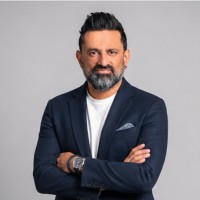
"Money alone won't win this; brands will always be able to outbid an agency on salary," he explains. "What tends to work better is giving people real variety early on: exposure to different clients and categories, and genuine ownership of strategy rather than being stuck on execution for two years."
Matthews frames the scarcity differently, arguing the shortage sits in breadth rather than in programmatic skill itself.
"There isn't necessarily a struggle to find programmatic experts per se; conversely, it can be tougher to find and fund more well-rounded expertise," he notes.
Where hybrid fits in
Both point to hybrid models as the realistic outcome, but each describes a different arrangement. Jaiswal puts the brand in charge of strategy and the agency in charge of trading.
"The cleanest model is one where the brand owns the strategy and data, the agency manages execution, and both sides have agreed in writing who is responsible for what and who signs off on which decisions," he says. "Where I've seen hybrid models break down is reporting: two teams producing two different sets of numbers, with no clear accountability when performance dips."
Matthews sets the agency on the other side of the same line: "A hybrid setup works when the agency is leveraged more as a strategic consultant rather than purely as an execution partner."
"It tends to collapse when roles, responsibilities, and accountability are unclear, or when the agency is brought in purely to execute rather than contribute strategically," he adds.
Jaiswal expects the region to settle on the hybrid model, regardless of where that line eventually falls.
"Brands with the budget and scale to do it properly will continue to do so, but the region simply doesn't have the talent pool or market size for full in-housing to become the norm," says Jaiswal. "What I do think will grow is the hybrid model: brands retaining control of data and strategy while continuing to lean on agencies for execution. It's more realistic for where the region is today, and probably the better outcome for everyone."
From this perspective, getting the first campaign live in-house is the easy part. For brands weighing it up, the test is whether in-housing can function competently once the person who built it has gone.
Ad TechAgenciesAgencyBrandsMENAProgrammatic







Follow ExchangeWire