
"Education is still the biggest gap.": Kevin Smyth, Vistar Media on Programmatic DOOH
by on 6th Oct 2026 in News
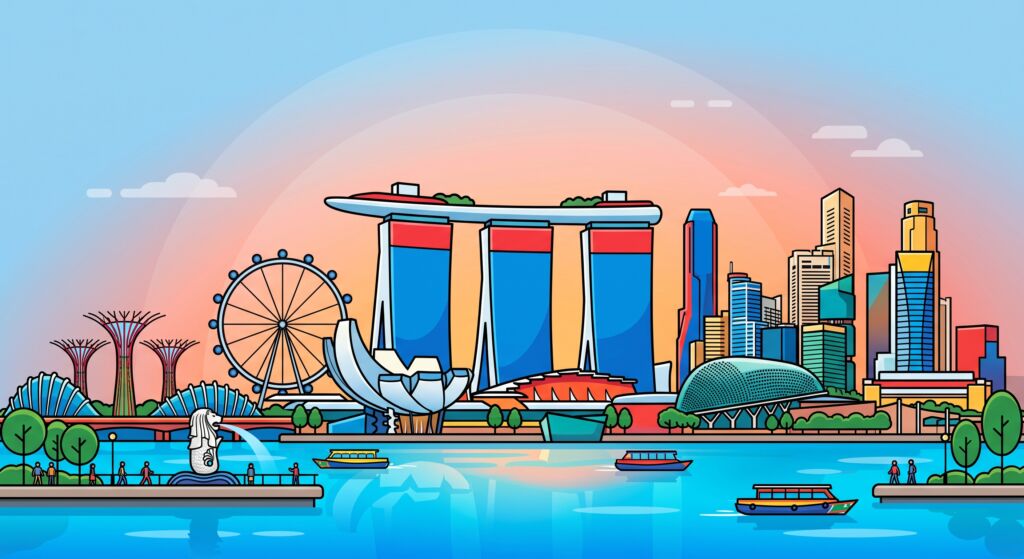
We sat down with Kevin Smyth, Commercial Director for Southeast Asia at Vistar Media, to look back at Vistar Connects Singapore, and the evolution of programmatic OOH in the APAC region...
Vistar Connects Singapore is billed as a moment to explore the "evolution" of programmatic DOOH in the market - what specifically has changed in Singapore's DOOH landscape over the past year or two that makes this the right moment for this conversation?
We are seeing much stronger buyer appetite and a far greater level of sophistication in how programmatic DOOH is being bought in Singapore. Data is also becoming a much bigger part of the conversation here, particularly around how advertisers can use it to reach the right audiences and moments more precisely.
Buyers are also leaning much more into the flexibility programmatic DOOH gives them. That becomes particularly valuable when market conditions are harder to plan around and advertisers need the ability to adapt activity rather than lock everything in well in advance.
We're seeing that momentum in our own platform, with both regional and global advertisers committing significantly more investment to DOOH ads than they did a few years ago.
Singapore also has many of the ingredients needed for programmatic DOOH to scale. It has premium environments, sophisticated buyers already familiar with programmatic workflows, concentrated audiences and the ability to influence adoption across the wider region.
Creativity in programmatic DOOH was a clear focus for the event. Why do you think creativity has lagged behind the technical/programmatic advances in this channel, and what needs to happen for brands to close that gap?
A big part of the issue has been a lack of awareness about what is now possible creatively in programmatic DOOH. There has also been a perception that more sophisticated creative is expensive to produce.
We are starting to see that shift, but education is still the biggest gap. Brands are becoming more aware of what can be done, but programmatic DOOH is still behind channels like online display when it comes to bringing creative partners into the process early and using specialist creative services.
To close that gap, clients need to have assets ready earlier and be more comfortable leaning on their programmatic DOOH partners as creative experts. That means using those partners not just to buy media, but to help adapt and build creative for the medium, whether that is motion, 3D, dynamic creative or reworking existing assets for different environments.
That is important because creative has a major impact on advertising effectiveness. Research cited at the event found that 49% of sales lift comes from creative, while separate research attributed 70% of ad performance to creative quality.
The event looked at the role of motion in driving effectiveness - can you give some examples of how dynamic or motion-based creative is outperforming static formats in DOOH, and what should media buyers be doing differently as a result?
The differences are quite clear when you compare formats directly. In recent research we commissioned covering 7,500 respondents, four creative formats were tested: static, subtle motion, full motion and 3D.
On brand awareness, 3D motion delivered a 67% uplift compared with static creative, while full motion and limited motion each delivered a 33% uplift. There were also differences in ad recall. Aided recall increased 44% for 3D creative compared with 38% for static, while full motion delivered a 41% uplift.
For media buyers, the key is to think about creative format as part of the media strategy itself. Programmatic DOOH should be bought for the things it does particularly well, including location, context, moment, flexibility and creative impact, with measurement planned from the outset.
For advertisers still treating DOOH as a bolt-on rather than a core part of the media mix, what's the biggest misconception holding them back, and what would it take to unlock its full potential?
One of the biggest misconceptions we still hear from advertisers is that programmatic DOOH is still something to test with leftover budget rather than something that should sit at the core of an OOH strategy.
The infrastructure is already there. It is becoming easier to buy, easier to activate and easier to measure. The opportunity now is to move from adoption to mainstream use.
What unlocks more of its potential is using the flexibility that comes with programmatic. Buyers can use data and context, automate activity, optimise campaigns and retain greater control over where and when activity runs. They can also target by location and venue type, points of interest, date and time, and creative.
Measurement is also now much more achievable. Brand lift studies give advertisers a way to understand performance, so measurement can be built into the campaign from the beginning rather than considered afterwards.
Singapore is often seen as a bellwether for programmatic adoption across APAC. What lessons or trends from the Singapore market do you expect to be most relevant to other markets in the region, and what are you hoping attendees take away and apply back home?
One of the biggest lessons is the value of flexibility and responsiveness. Programmatic DOOH can be live within hours, which gives advertisers the ability to focus on the moments that matter and react to what is happening now.
What we are also seeing in Singapore is buyers becoming more comfortable with the idea that the plan should not be either traditional out-of-home or programmatic out-of-home. The combination of the two can be much more powerful.
Traditional OOH can deliver broad reach and presence, while programmatic DOOH gives buyers the ability to upweight activity, target particular moments and follow the consumer journey throughout the day. That allows advertisers to use context, proximity and timing more effectively rather than treating programmatic as a separate test channel.
That conversation is becoming more established in Singapore, while in some other regional markets it is still at an earlier stage. One of the key learnings for those markets is to think about how traditional and programmatic OOH can work together in the same plan to reach consumers at the right moments.
Measurement is another important part of that. For example, foodpanda used audience and location intelligence to reach grocery shoppers around Sheng Siong stores, and the campaign delivered measurable lifts across ad recall, brand image, consideration, brand interest and brand attribution.
APACDOOHOOHProgrammaticSingaporeSoutheast Asia







Follow ExchangeWire