
"This Industry Isn’t Done Innovating.": Andrew Casale on Index Exchange’s Containerised Future and a DSP Renaissance
by on 16th Jun 2026 in News
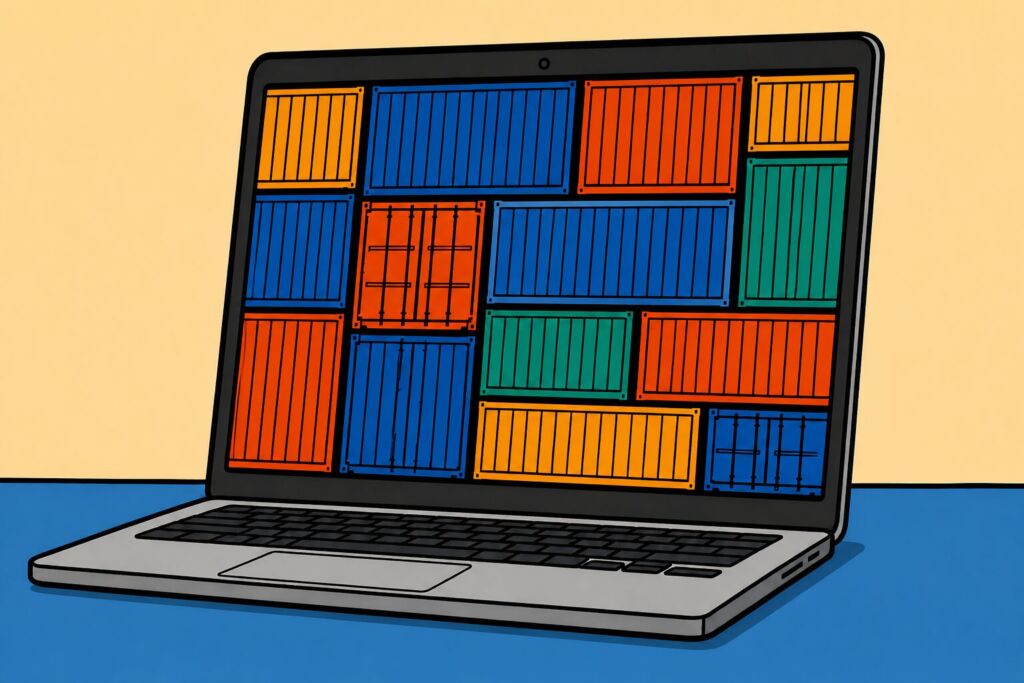
ExchangeWire head of content, John Still, sat down with Index Exchange’s CEO and President, Andrew Casale, to discuss the Index Cloud, the future of DSPs, and more before his ATS Singapore and London appearances…
For Index Exchange, what began with curation has evolved into something far more ambitious: a rethinking of where data, decisioning, and even DSP logic should live.
Before he sits down to chat with Ciaran O’Kane at ExchangeWire’s ATS Singapore and ATS London, Index Exchange’s president and CEO, Andrew Casale, speaks about that evolution - from early supply curation through to the recent launch of Index Cloud - and explains why he believes the shift could unlock a new wave of innovation across programmatic.
From curation to decisioning
Casale traces the origins of Index’s current strategy back to the early emergence of supply-side curation.
“A few years ago, we saw the earliest formation of the curation trend,” he says. “The idea was to curate supply on the sell side, package it, and make it easier for buyers to navigate what had become an increasingly fragmented ecosystem.”
That fragmentation, spanning web, CTV, mobile apps, and native, created an opportunity for SSPs to play a more active role in organising inventory. But what happens when you apply data on the sell side, rather than relying solely on demand-side targeting?
“Historically, data was applied in the DSP,” Casale explains. “But when we started applying the same datasets on our side, we discovered we could often find more, especially for scarce audiences.”
The reasoning is structural. The supply-side operates without the same throttling constraints as DSPs and sits closer to both publisher and user signals. With access to what Casale describes as “700 billion requests globally a day”, Index could apply data at a scale and fidelity that changed outcomes.
That progression, from curation to data, naturally led to the next question: could optimisation itself move to the sell side?
The shift to models and the rise of containerisation
That question underpinned Index’s move into custom bidding models, first announced in late 2024 after a year of internal development.
“If we could curate supply and apply data on the sell side,” Casale says, “what would happen if we trained models there as well, using the same scale and signal to drive performance?”
“To do that at our scale would have been incredibly cost-prohibitive,” he notes. “You’re talking about petabytes of network traffic just to ‘listen’.”
Instead, Index pursued a different approach: containerisation.
By running partner code locally within its own infrastructure, in secure, cryptographically signed environments, the need to ship vast volumes of data externally is eliminated.
“We don’t see the code, we don’t know what it does, it’s effectively a black box,” Casale says. “But that’s how ad tech has always worked. The difference is now it runs locally, which makes it dramatically more efficient.”
Expanding the use case
What began with optimisation models has since expanded into other areas.
In late 2025, Index announced its first containerised data partner, Gracenote (a Nielsen company), bringing streaming metadata directly into the exchange’s environment. The move was designed to handle the growing scale, and volatility, of live CTV events.
“Live streaming creates massive spikes,” Casale says. “Processing those the old way is increasingly expensive. By containerising the data and keeping it local, we saw the same efficiency gains.”
The next step came as Bedrock Platform introduced its containerised DSP, and partnered with Index Exchange to host it in the Index Cloud.
Speed, scale, and a ‘happy surprise’
While reducing network costs was the primary objective, Casale says the most significant outcome has been performance.
“The expected win was eliminating the cost of sending all that data out,” he says. “The surprise was speed.”
By running locally, the DSP can process requests far faster than traditional architectures allow - removing latency associated with external calls and enabling more responsive bidding.
“That tonnage we were sending out was actually slowing everything down,” Casale explains. “Now the bidder is lightning fast.”
In an industry that’s all about the finest margins, faster DSP response times could allow upstream models – which currently operate within tight time constraints – to become more sophisticated.
“Today, models might have five milliseconds to make a decision,” Casale says. “If downstream processes speed up, that window expands. And if models have more time, they can think more, do more, and potentially interact with other systems.”
Reopening the DSP landscape
Beyond efficiency and speed, Casale believes containerisation could have structural implications for the DSP market itself.
One of the longstanding challenges for DSPs is managing QPS (queries per second), effectively limiting how much of the available supply they can process due to cost constraints.
As a result, exchanges often pre-filter inventory, narrowing the “pipe” of opportunities sent to DSPs.
“The reality is every DSP would prefer the full pipe,” Casale says. “Because with more visibility, they can be more selective, they can cherry-pick the best opportunities.”
By enabling DSPs to process far greater volumes of supply more efficiently, containerisation could remove that constraint, potentially levelling the playing field between large and smaller platforms.
“I think this creates the conditions for a mini DSP renaissance,” Casale suggests. “Scale alone won’t define performance anymore. It opens the door for new approaches, whether that’s agentic workflows, new optimisation techniques, or entirely different buying strategies.”
Industry response and a return to experimentation
The industry’s reaction, Casale says, has been unusually strong.
“I don’t think I’ve seen anything like this before,” he says. “And it’s not just about Index, it’s about reopening the idea that this market isn’t done innovating.”
He contrasts this with recent years, where “innovation” often meant collapsing SSP and DSP functions into vertically integrated stacks, something he characterises as a return to older ad network models.
“What’s happening now is different,” he argues. “We’re seeing partners come to us with entirely new ideas, not just about containerising models or data, but about what becomes possible when everything runs in the same environment.”
That includes more advanced, potentially agentic systems, though Casale cautions that such developments are still some way off.
“If the agentic future had already arrived, we’d all know it,” he says. “But this is the environment where it starts to take shape.”
For Casale, the most telling sign of change is cultural as much as technical.
“The number of whiteboard sessions we’ve had since the announcement, that’s what excites me,” he says. “Early programmatic felt like that. Then things plateaued for a while. Now that energy is back.”
AIATSCurationDisplayDSPProgrammatic







Follow ExchangeWire