
"Trust is Becoming More Valuable, Not Less, in an AI-Driven Media": Erin Williams, BBC Studios
by on 8th Sep 2026 in News

With AI assistants reshaping how audiences find information and advertisers reassessing where premium budgets land, Charlotte McEleny spoke to Erin Williams, SVP Advertising Sales and StoryWorks, APAC, BBC Studios, about why the company is building its APAC commercial pitch on editorial credibility....
Audiences across APAC increasingly find information through AI assistants and AI-summarised search results rather than a ranked page of blue links, and publishers are working out what that does to referral traffic, brand visibility, and the commercial case they take to advertisers.
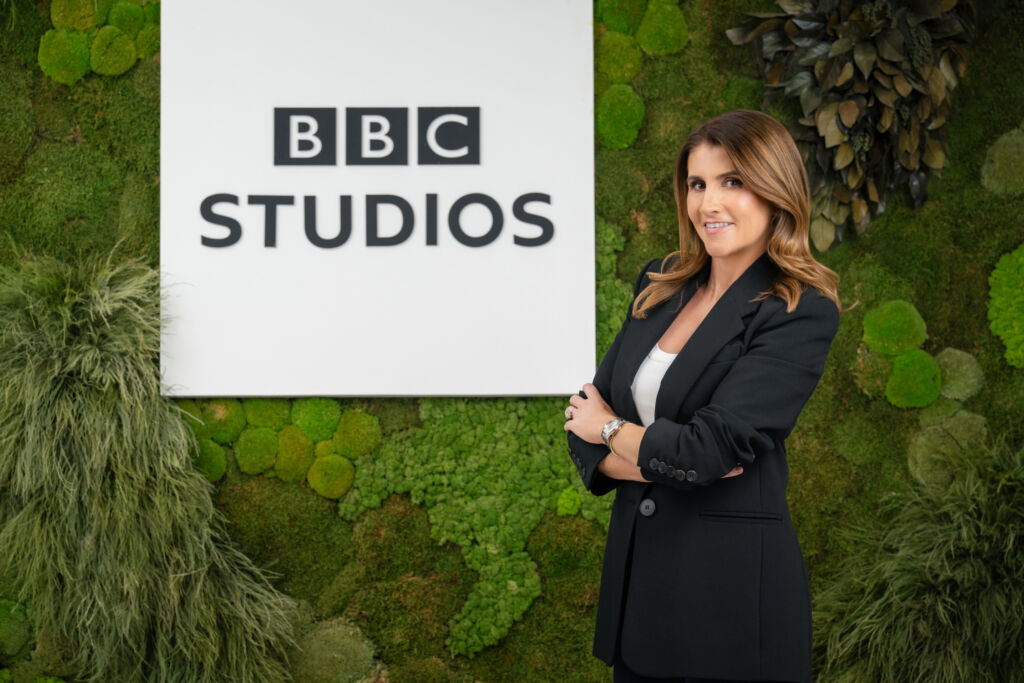
For BBC Studios, the BBC's commercial arm, the answer is a familiar asset in a new context. The business sells production, distribution, content, advertising, and branded content through BBC StoryWorks, and its pitch to brands rests on editorial credibility being scarcer, and therefore more valuable, as AI-generated content proliferates.
Erin Williams has just joined BBC Studios after roles across several of the world's largest publishing brands. She sets out what the company is seeing across the region and why she thinks AI raises the premium on trusted media rather than eroding it.
What are the key trends you're seeing across APAC for publishers at the moment?
A few trends are happening simultaneously across APAC, and they're reinforcing each other. First, trust is becoming more valuable, not less, in an AI-driven media environment. As content becomes increasingly generated, summarised and distributed by algorithms, the premium on knowing where information comes from and who is accountable for it only increases.
At the same time, audience attention is fragmenting across more platforms, formats and devices than ever before, often faster than publishers' commercial models can adapt. As a result, advertisers are rightly scrutinising where budgets are going, looking much more closely at brand suitability, measurement and whether audiences are genuinely engaging with content rather than simply being exposed to it.
We're also seeing continued growth in premium video, stronger demand for integrated partnerships rather than standalone campaigns, and increasing interest in first-party audience relationships as publishers adapt to a more privacy-focused ecosystem. Strong IP and passionate fan communities are becoming more valuable too, because brands increasingly want to be part of the stories and cultural moments people care about, not simply sit adjacent to them.
For the BBC, the focus is on bringing those trends together. Trust remains the foundation, but it's increasingly about extending that trust across premium factual, entertainment, and family content, creating meaningful connections with audiences through content they love.
Much has been said about the disruptive role AI and AI search are playing in how people access news and information. How does that change the role of a company like the BBC for advertisers?
The conversation around AI often focuses on disruption, but from our perspective it actually reinforces the importance of trusted publishers and trusted content.
For BBC StoryWorks, our productions remain fundamentally human-led. We use AI where it can improve efficiency, insights, and measurement, but people still drive content creation, creative judgement, editorial rigour, and storytelling. As AI-generated content becomes more prevalent, those qualities become increasingly valuable.
The bigger shift is in discovery. Just as SEO became critical in the search era, we're now entering an age where GEO, as a new recommendation model, is becoming equally important. As more consumers turn to AI assistants and search experiences to find information, the challenge is no longer simply ranking on a results page. It's about becoming a trusted source that AI systems reference, cite and surface in their responses.
That has significant implications for brands and publishers alike. The organisations best positioned to remain visible and influential in AI-driven discovery will be those with established authority, strong editorial standards and proven credibility. For advertisers, credible environments and credible information sources are becoming more important, not less.
AI doesn't diminish the role of trusted media brands; if anything, it increases the premium on them.
How does that translate into what you actually sell? What's BBC Studios' commercial model in APAC?
While the BBC is often associated with breaking news, audiences increasingly come to us to explore their passions through trusted, in-depth analysis and long-form storytelling across areas such as travel, business, technology and science. Great storytelling is in our DNA, and that breadth and scale give us an extraordinary platform for brands to engage with audiences.
We do not think in terms of separate commercial silos. Instead, we start with the client's objective and bring together the most relevant parts of our portfolio to help achieve it. Our Affinity Network approach enables us to connect brands with highly engaged audiences and fan communities across passion points such as family, factual, entertainment, food and travel, reflecting how people consume content today. BBC StoryWorks sits at the centre of that approach, creating ideas that can travel seamlessly across content, platforms, partnerships, sponsorships, events and licensing. The result is a more connected, audience-led solution built around culture and storytelling rather than standalone commercial products.
You've stepped into this role after working across some of the biggest publishing brands in the world. What are the biggest changes you've seen, and how do they shape your view of where the industry goes next?
The industry has faced no shortage of market-driven disruption: the dominance of the Google and Meta ad duopoly squeezing publisher margins, cookie deprecation forcing a shift to first-party data, platforms deprioritising news and publisher content in feeds, and now AI and AI search reshaping how people discover information altogether. Add in the pace of new platform adoption and shifting audience preferences, and it's a lot for any commercial organisation to keep up with.
One constant I've seen across my career, alongside all of that, has been internal rather than external: commercial functions within the same business underserving clients by operating in silos rather than as one cohesive solution. Much of that comes down to how it's set up. Many businesses are publicly listed and, understandably, beholden to stock price and shareholder returns, which drives discipline but can also lead to shorter-term decision-making.
What's different about BBC Studios is that our fundamental purpose and structure are based on the values of the BBC as a public service organisation, which allows genuine long-term strategic planning and partnerships. Under new leadership, we're working together to deliver great value and strong outcomes for clients rather than operating as separate parts.
What are you most excited about in the role?
What excites me most is the combination of scale, purpose and possibility, a combination that is increasingly rare in today's media landscape. The BBC's mission to inform, educate and entertain has remained unchanged for more than a century. In an industry often driven by short-term cycles, that continuity creates stability that lets us think differently about partnerships. We know what we stand for and our mission hasn't changed in the last 100 years, nor will it change in the next 100.
I'm also energised by the ambition across BBC Studios today. We're investing in how we reach new generations of audiences, expanding our digital footprint, and finding new ways to connect world-class content, talent and IP with fans wherever they are. The challenge for all media companies is balancing scale with trust, and innovation with responsibility.
On a personal level, as a parent, I care deeply about the kind of media environment young people are growing up in. As trust, safety and responsible content become increasingly important to audiences, advertisers and regulators alike, I believe trusted, human-led storytelling will only become more valuable.
APACATS SingaporeCTVDisplayPublisherStreamingTransparency








Follow ExchangeWire